

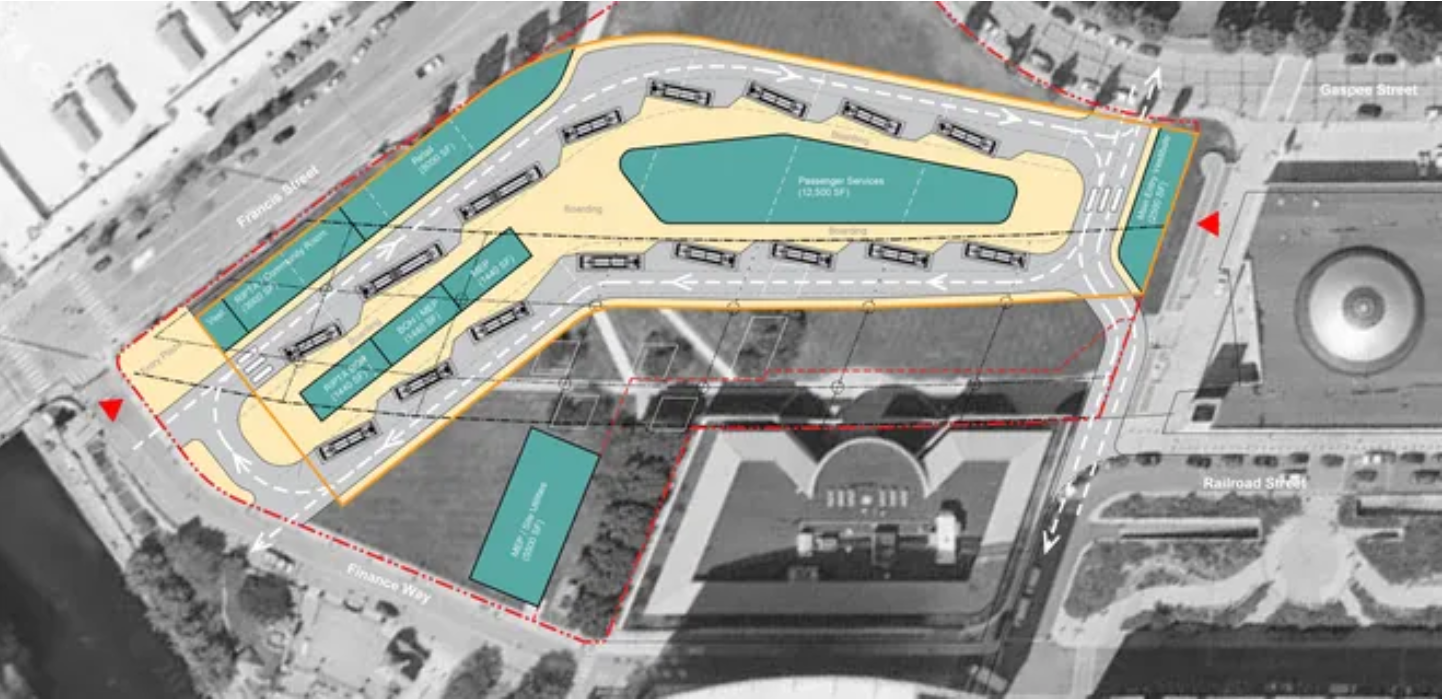
A preliminary schematic design of a proposed RIPTA bus hub next to the Providence Train Station. Provided By Rhode Island Public Transit Authority.
Build the Hub. Build the Transit System. | Opinion
The following op-ed was published in the Providence Journal on Sept. 13 by Scott Wolf and John Flaherty. Read it in the ProJo here.
RIPTA’s decision to move forward with plans for a new central transit hub next to the Providence Train Station is an important step for Rhode Island. A modern, climate-controlled bus facility connected to Amtrak and the MBTA rail will make the transit experience safer, more convenient and attractive for more passengers.
Grow Smart Rhode Island has supported the concept of a user-friendly, centrally located transit hub for more than a decade, including enthusiastically backing the 2014 bond referendum that provided funding for transit hub infrastructure. The latest proposal offers an opportunity to finally get it right.
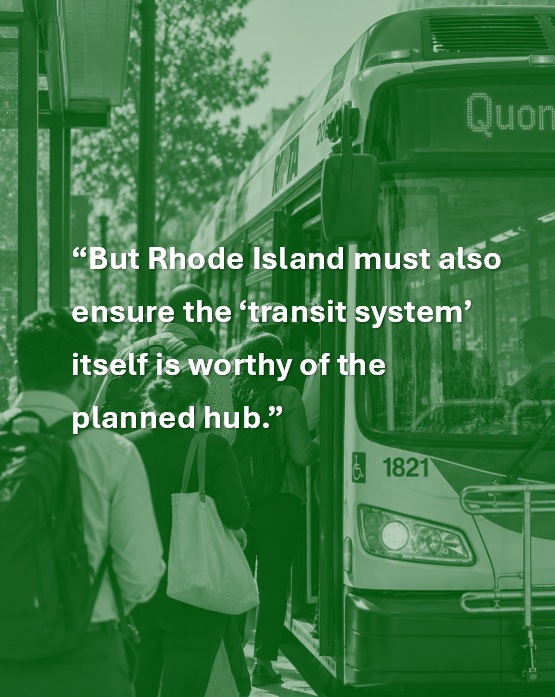
But Rhode Island must also ensure the transit system itself is worthy of the planned hub.
Nearly a year ago, the Rhode Island Public Transit Authority was forced to implement the largest service cuts in its history due to a funding shortfall of $5 million in a $15.2 billion state budget (0.03% of the budget). The consequences extend far beyond inconvenience for riders. A recent analysis found that routes with service reductions saw ridership decline by 14%. The impact is felt by workers who struggle to reach their jobs, employers who depend on reliable transportation for their workforce, and residents whose access to education, health care, childcare and other vital services has been significantly diminished.
When iconic Rhode Island toymaker Hasbro was considering a new headquarters, CEO Chris Cocks said the company was prioritizing convenience to public transit. Hasbro ultimately chose Boston. We shouldn’t ignore that signal. While transit alone doesn’t determine where companies locate, we know that employers competing for talented workers increasingly value places where people can get around easily without always depending on a car.
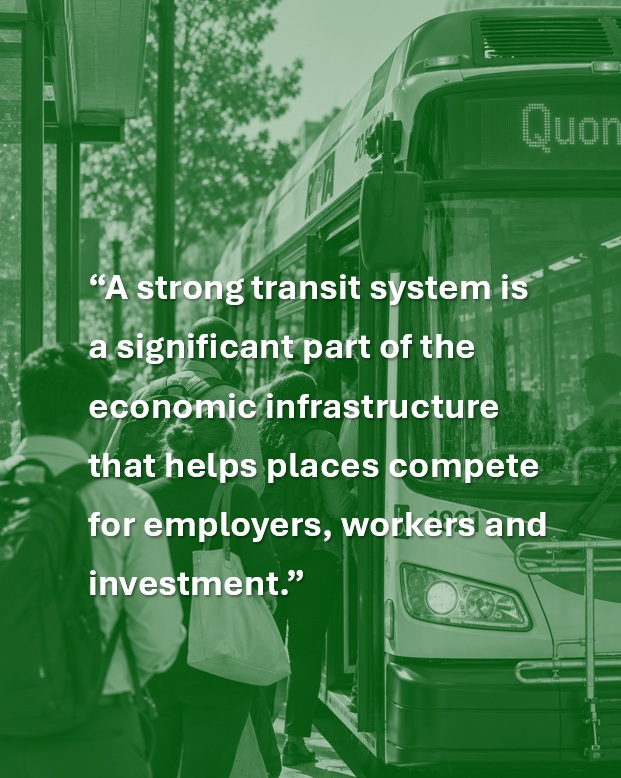
A strong transit system is a significant part of the economic infrastructure that helps places compete for employers, workers and investment.
But don’t take our word for it. The state’s own economic, housing, land-use, transportation and climate strategies all recognize how essential a strong transit system is for expanding Rhode Island’s economic opportunities, housing choices, climate action and quality of life. These include “Ocean State Accelerates“, “Housing 2030“, “Land-Use 2050“, “Moving Forward RI 2050“ and the “2025 Climate Action Strategy.”
Investing in better transit is also important to ease Rhode Islanders’ cost crunch. Transportation is one of the largest expenses facing households. Reliable alternatives to car ownership – or at least multiple car ownership – can put more than $10,000 back into the family budget for each vehicle dropped (an unlimited RIPTA pass costs $840 annually).
The challenge is finding the political will and resources to make the entire system work.
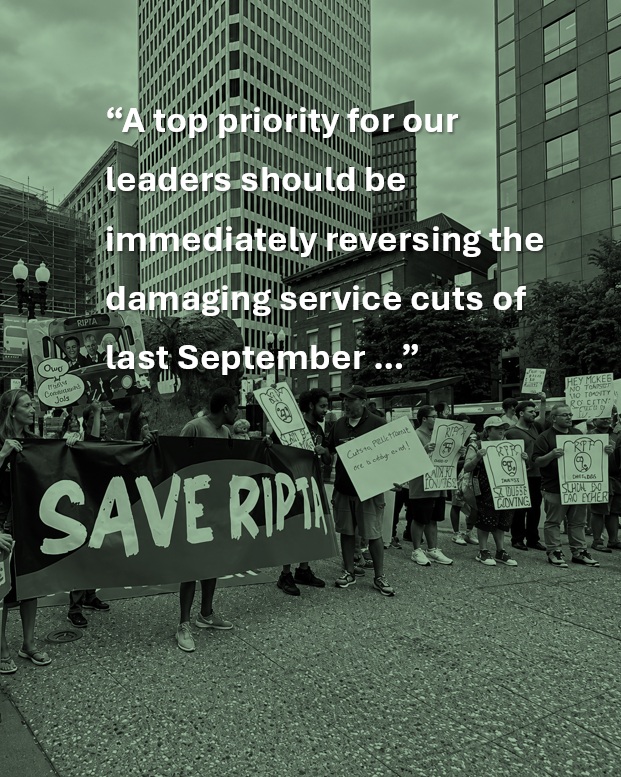
And, there’s no silver bullet. It will require a combination of near-term and longer-term sustainable funding strategies. A top priority for our leaders should be immediately reversing the damaging service cuts of last September, followed by systematic, multi-year implementation of service improvements outlined in Rhode Island’s Transit Master Plan. In addition to finding savings in a massive state transportation budget, Grow Smart has proposed a value-capture approach that would reinvest a portion of new public revenues generated by development around transit investments to support both transit and housing.
In the most recent general election, 51 cities and metro regions around the country passed ballot measures to improve their transit systems.
So, the choice before Rhode Island is bigger than simply where to put a bus station.
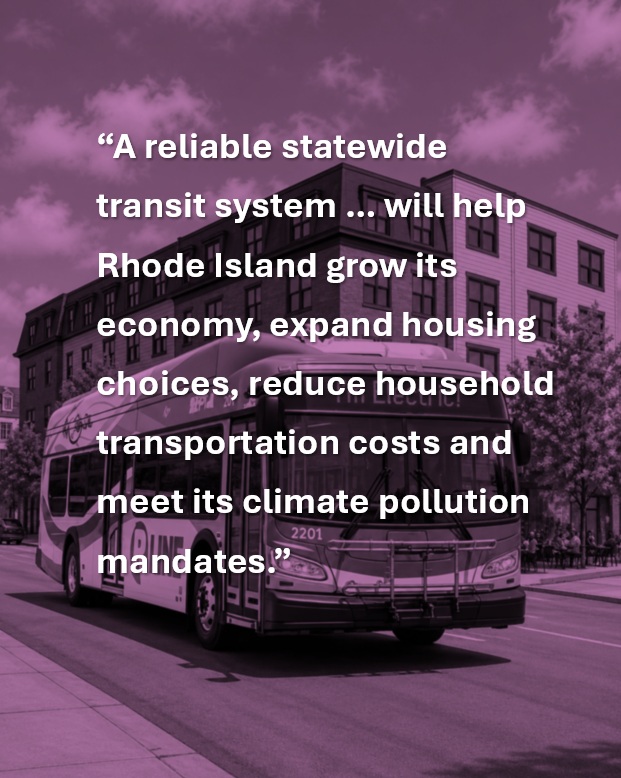
A reliable statewide transit system connected to a modern hub in the heart of the capital city will help Rhode Island grow its economy, expand housing choices, reduce household transportation costs and meet its climate pollution mandates.
Rhode Island’s progress depends on being serious about doing both.
Scott Wolf is executive director, and John Flaherty is senior advisor and special projects, of Grow Smart Rhode Island.