

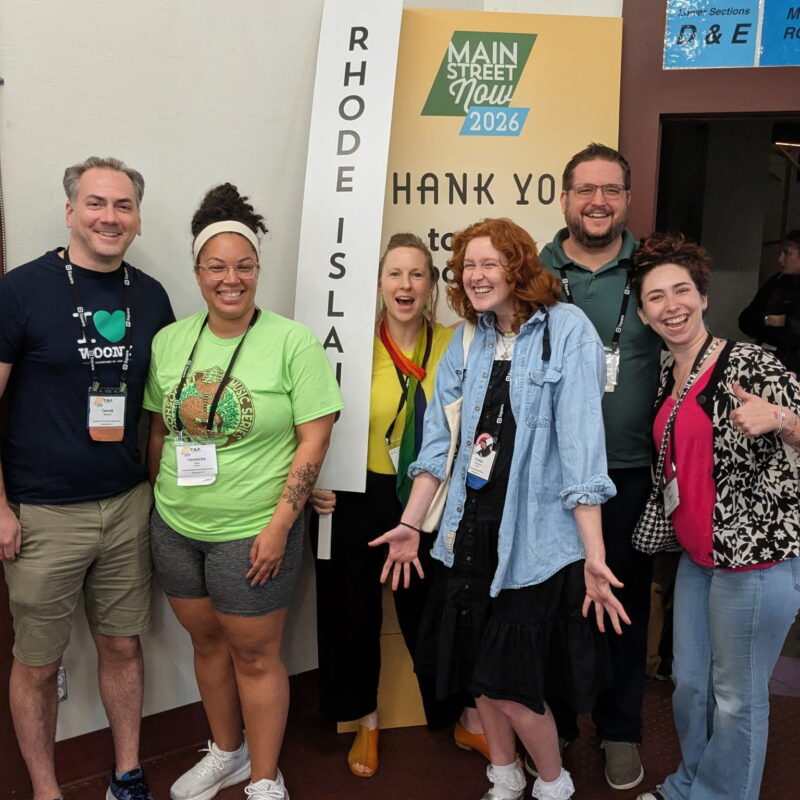
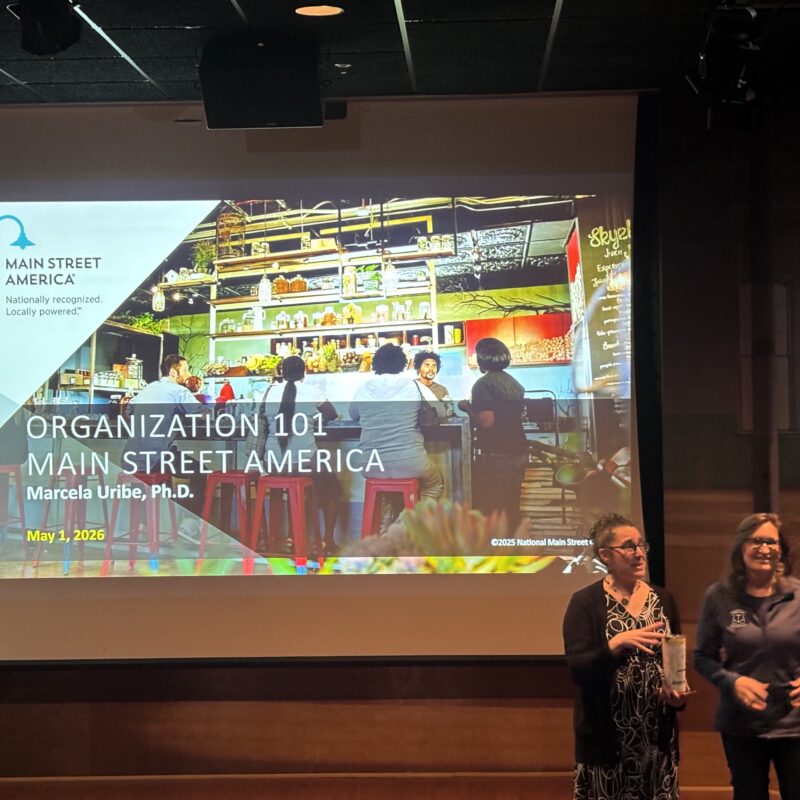
In January 2026, we launched the RI Main Street Learning Cohort – the first pilot of its kind in our state. We didn’t know what to expect. 85 participants, 11 teams, and 6 learning sessions later, here’s what we learned.
By Evelyn McKenney
The demand was already there
When we opened the application process for our Main Street Learning Cohort, we thought we might get 5 teams. In the end, 11 teams participated! Teams hailed from Woonsocket, Pawtucket, Central Falls, Providence (two teams), Cranston, Warwick, North Kingstown, South Kingstown, Hopkinton, and Richmond. We convened planners, members of neighborhood associations, municipal leaders, business owners, and enthusiastic residents for 6 day-long workshops. It was inspiring for us to connect with so many people who share our passion for local main streets.
Rhode Island is unique
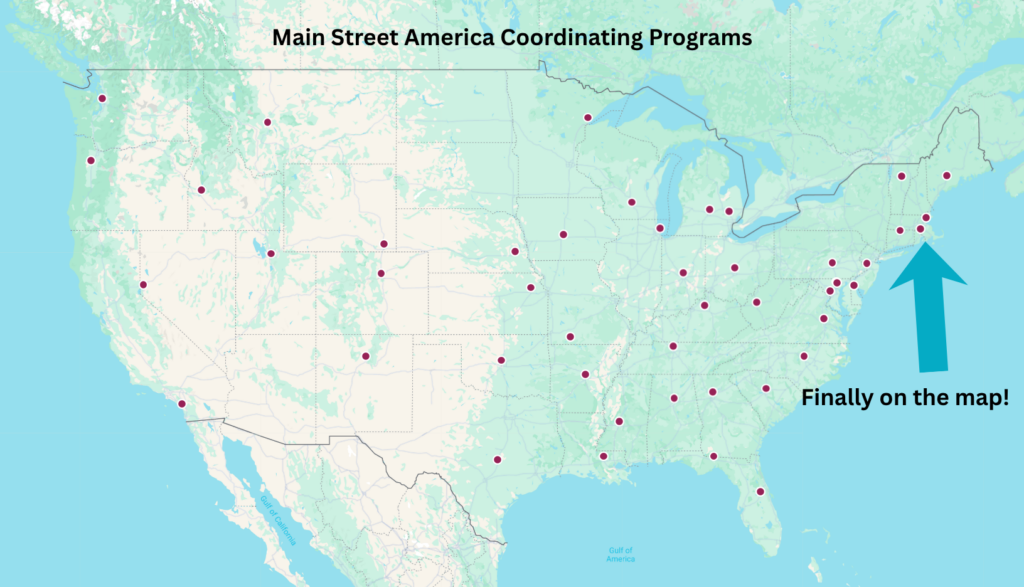
Our state’s quirks were amplified as we brought Main Street America’s national framework to RI. Up until Summer 2025, we were one of the few states without a statewide Main Street Coordinating entity. Our small geography, population size, and network of villages make us distinct from most existing programs. How do we structure local main street organizations when our districts are rubbing up against each other? How can we build capacity while organizing around pre-existing efforts on the ground? How do we develop a brand new coordinating program, when other states’ programs have been around for decades?
We are grateful to partner with Main Street America in this exciting journey and learn from each other. They are even using our capacity-building cohort as a model for developing new coordinating entities in cities and states across America. How cool is that?
The Four Points in practice
The Main Street Approach or “Four Points” isn’t rocket science. The process of sustaining thriving places is inherently multifaceted: a cohesive aesthetic attracts visitors, events generate enthusiasm and bring folks together, small businesses stimulate the local economy, and passionate people keep things running.
This approach serves as a guiding force and framework to turn back to when progress feels murky. The Learning Cohort sessions helped develop this shared vocabulary. It was rewarding to watch the “aha” moments as teams applied the Four Points to their vision, discovering that maybe the next step is building relationships with local business owners, or taking on that preliminary beautification project, or hosting a community forum to build capacity. The road ahead is challenging, but it’s exciting to watch plans take shape.
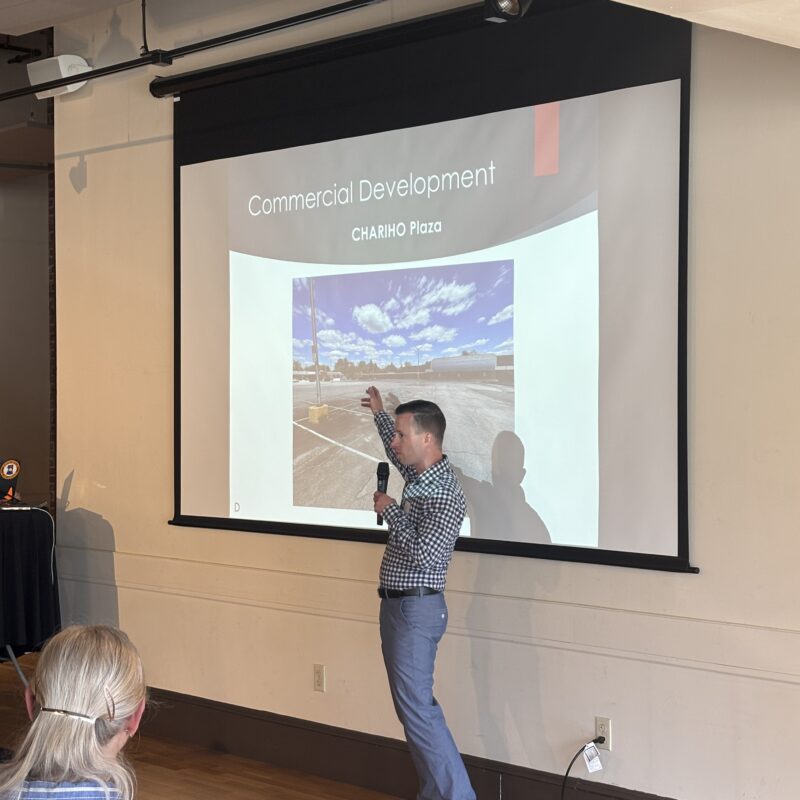
Final team presentations
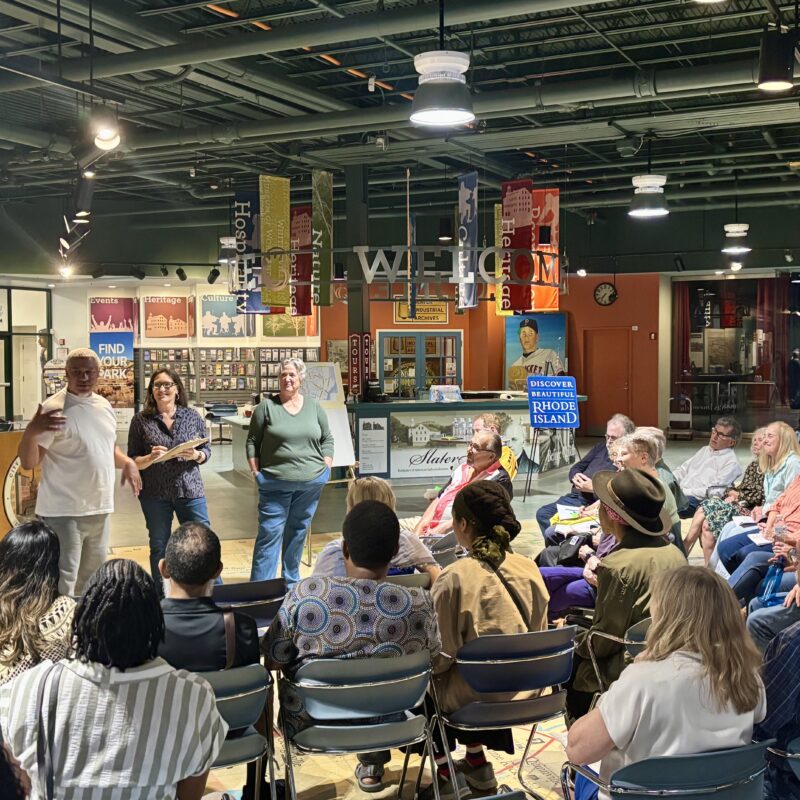
Community forum in Pawtucket
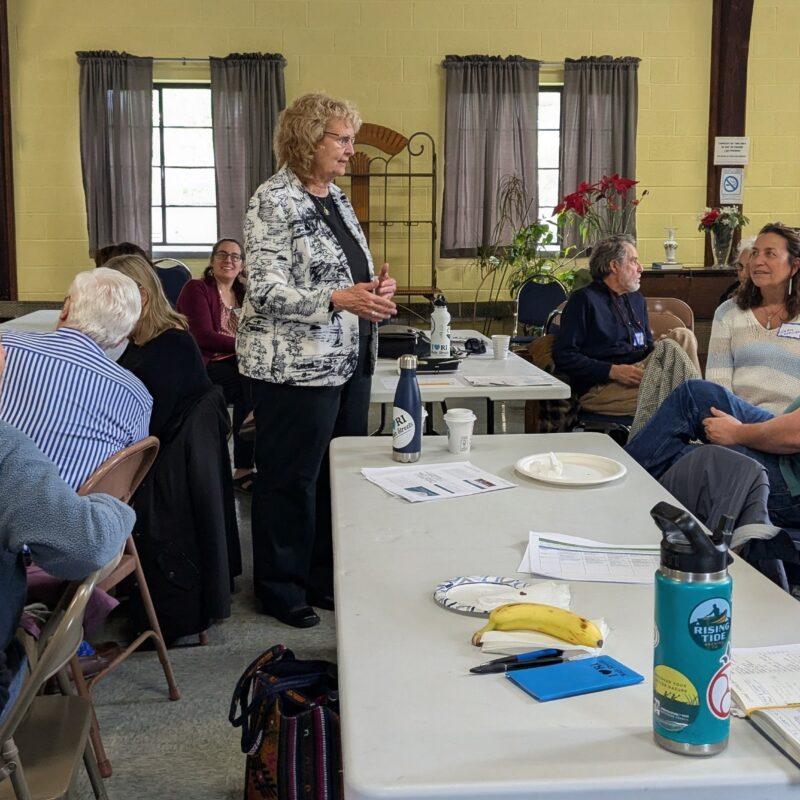
Workshop with MSA staff
Progress is incremental. Celebrate the small wins!
In our first workshop in January, our amazing MSA facilitator, Lisa Thompson, reminded everyone to take pride in the small wins. This initial cohort was focused on learning, and yet – many teams have already sprung into action! These are primarily VOLUNTEERS, dedicating time to make their places great.
Our Cranston team conducted a community survey asking residents what they’d like to see in Rolfe Square. Team Pawtucket convened over 40 community members to discuss the assets and gaps of their Downtown. The neighboring teams of Richmond and Hopkinton are exploring ways to share the financial burden of implementing software to track foot traffic in Hope Valley. Some teams are plotting means to hire a full-time person focused on their district. Others are digging into developing a district-wide building inventory. And all teams are sharing resources, best practices, and inspiration with each other.
A huge CONGRATULATIONS to all those who participated in our 2026 Learning Cohort. We are so excited to continue working and learning together. Join us at our 2026 Main Street Together Conference for updates on our 2027 programming, because we are just getting started!