

From Strip Mall to Gathering Place: Tulsa’s Global District and the Future of Main Street Revitalization
June 4, 2026 at 12PM
Featuring: Alejandro Garcia, Executive Director of the Tulsa Global District
Across the United States, many of the commercial corridors where communities gather don’t look anything like a traditional, historic Main Street district. They’re strip malls, parking-lot-fronted corridors, and auto-oriented strips built for a different era. How do we bring the Main Street approach to places that weren’t designed with walkability, community gathering, or historic character in mind? What does “retrofitting suburbia” look like in practice, and what tools, strategies, and partnerships make it possible?
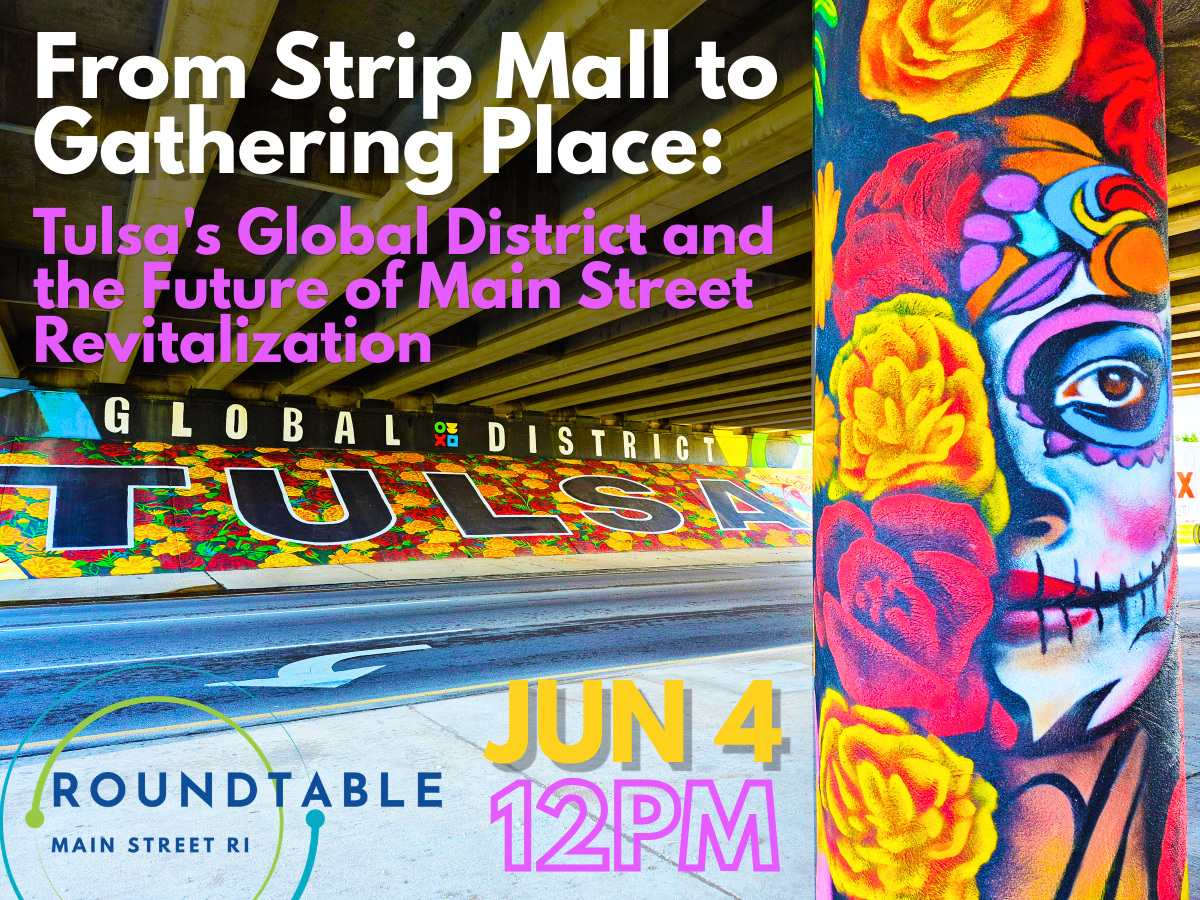
The Tulsa Global District is a Main Street America program in the heart of East Tulsa, Oklahoma, the most multicultural area of the city. Founded in 2020, the organization works to support and amplify local businesses, celebrate cultural heritage, and host community events that reflect the district’s rich international identity. Leading the organization is Executive Director Alejandro Garcia, who brings a background in marketing and entrepreneurship to the role. Originally from Puebla, Mexico, Alejandro joined the Global District as Small Business Specialist in 2023 before stepping into the executive director position. He holds an MBA with a graduate certificate in entrepreneurship from Oklahoma State University and has coached dozens of small businesses on branding and market growth.
RESOURCES
From strip malls to gathering places: How a commercial corridor is being reimagined as a community’s Main Street
How do you build a Main Street where one doesn’t exist? That’s the unique challenge Alejandro Garcia is taking on as executive director of Tulsa Global District. The nonprofit was founded in 2020 to revitalize a commercial corridor in East Tulsa, a one-square-mile area that is home to more than 200 small businesses. Nearly half of the businesses are owned by immigrants representing 25 countries, most of them Latin American.
“When you hear ‘Main Street,’ what comes to mind are the typical brick and mortar storefronts and preserved older buildings,” says Garcia. “Tulsa Global DIstrict is mostly big strip malls, big parking lots, and not a lot of walkable spaces.”
Yet by building relationships with the local business owners, walking audits, programming, and other initiatives, Garcia is starting to put the district on the map as a vibrant hub of entrepreneurship, local art, and authentic cuisine from every corner of the world.
As guest speaker for the June 2026 Main Street RI roundtable, Garcia shared some of the Tulsa Global District projects underway:
URBAN DESIGN
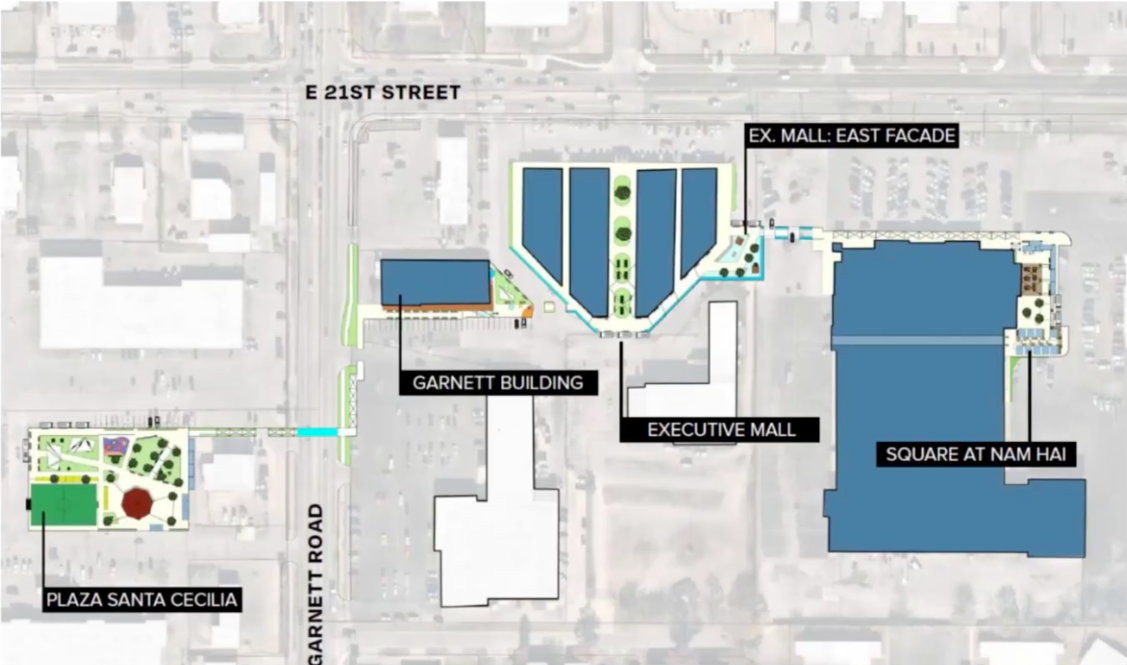
For potential placemaking initiatives, “we don’t have a lot of public spaces or green space to work with,” Garcia says. “So we had to start with where we were, looking for a project to unify lots of businesses.” One plan calls for connecting three of the district’s large malls with a walking corridor, anchored on one end with a park/gathering space at Plaza Santa Cecelia.
A walking audit this past winter found that 300 people pass through the area each day. The first step to creating a Dragon Trail for walking and biking was cleaning up the area and removing rubble, and taking down a fence. Installing colorful bike racks in the shape of dragons is a nod to the Asian American and Pacific Islander community who frequent the Nam Hai area. Also planned is an arch at the trailhead.
Digital marketing assistance
Garcia’s background includes running an award-winning marketing agency and coaching dozens of startups and small businesses on branding, strategy, and market growth. Recognizing that many business owners in the Hispanic community need help with digital literacy, he launched a program, Connect Local, that offers small businesses free advertising and marketing support. “For three months we create ads and track click results, typically helping the business gain hundreds of contacts on their Whats App accounts,” Garcia says. With $10,000 in funding, Connect Local can support cohorts of five businesses for three months. People have suggested they offer classes, but “we’re not trying to turn taco makers into marketing experts,” he says.
Garcia also launched a district-wide digital marketing campaign, Eating East, to highlight the district’s vibrant, globally diverse food scene, the family-owned eateries and food trucks offering cuisines from around the globe. The campaign elevates East Tulsa as part of the city’s identity while celebrating local businesses and cultures and inviting people to come sample the food.
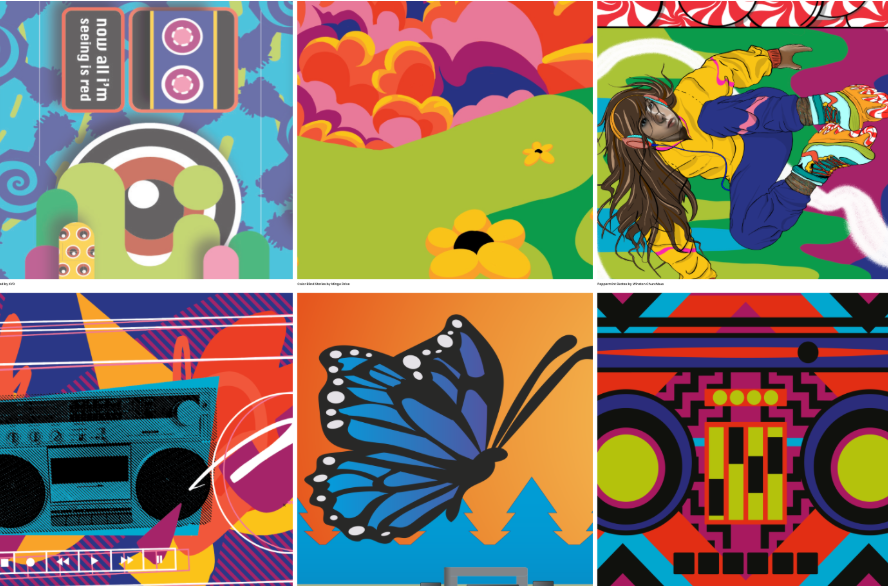
The six murals that will soon wrap traffic control boxes on Tulsa Global District street corners.
With its Beat Boxes public art project, Tulsa Global District will transform putty colored traffic control utility boxes. Six original songs by Tulsa musicians were chosen from more than 100 submissions. The songs were paired with visual artists who designed murals to complement the music. The art will be wrapped around the boxes. A QR code on the box will link to the song that inspired the art.
Cultural programming
Garcia’s nonprofit organized an Asian American Night Market in May that brought 4,000 people to the district to celebrate Asian American heritage with music, food, and performances by 18 groups on two stages. Similarly, La Fiesta del Tulsa will bring a “gigantic party” to the district in September to celebrate Hispanic culture with a parade, food, and performances.
Affiliated with Main Street America
Garcia is the sole staff member of the nonprofit, which he joined initially as a small business specialist. For advice and resources, he can turn to Main Street America — the district is one of more than 1,200 neighborhoods and communities nationwide that are affiliates of the national program. The George Kaiser Family Foundation, with a mission that includes elevating East Tulsa, is the district’s primary financial supporter. The nonprofit also receives support — both financial and logistical — from the City of Tulsa.
“I’m proud of this community and how they have learned to relate to each other,” Garcia says of the district. “Not just for making business, but for creating bonds and a real community and a sense of, ‘We are here in Tulsa working together to improve ourselves and the city.’”
Short video, “Why Main Street Matters: Alejandro Garcia, Tulsa Global District”