

Activating Public Spaces
April 9, 2026
Featuring: C.J. Opperthauser, Executive Director of Friends of Congress Square in Portland, ME
Main Streets are more than just commercial centers; they are the “third places” where the heart of a community beats. But how can we make a place feel truly welcoming to everyone? How can programs and events develop a community’s commitment to their place and to each other? Why is doing this important? And what can we do if we’re just getting started (and don’t have a budget)?
RESOURCES
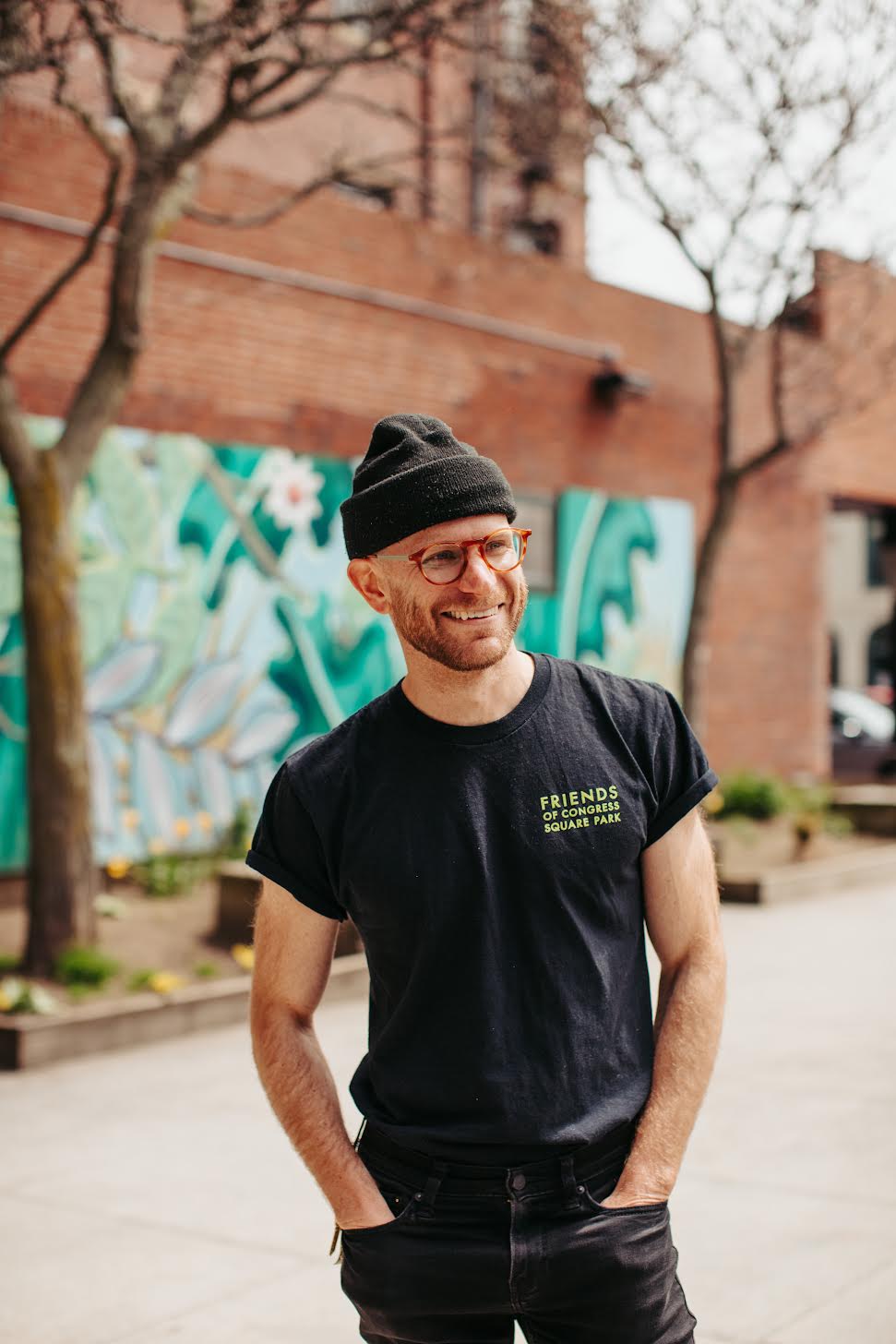
“Public spaces are our one truly accessible, equitable platform for human connection.”
Meet placemaking leader C.J. Opperthauser
In his five years as executive director of Friends of Congress Square Park in downtown Portland, Maine, C.J. Opperthauser has cultivated a dedicated corps of volunteers and invited a wide variety of community programming to the pocket park year round. “You’re activating a public space,” he says of his work, “but really you’re building community.”
Formerly director of placemaking and training for Grow Smart RI, Opperthauser also freelances as a placemaking consultant. In presenting the “Activating Public Spaces” Main Street RI Roundtable, he began with the “why” of his work: “Public space is our one truly accessible, equitable platform for human connection, communication, expression, and simply being.” In the midst of a loneliness epidemic, increasing social divides, and threats to democracy, he sees public spaces as one of the better platforms to address many of those concerns.
PROGRAMMING
As the sole staff member of his nonprofit, Opperthauser works to cultivate a sense of co-ownership in all of the park’s functions, including the planning and executing of roughly 200 events throughout the year. The park hosts everything from small language table groups to dances, concerts, films, markets, and circus performances.
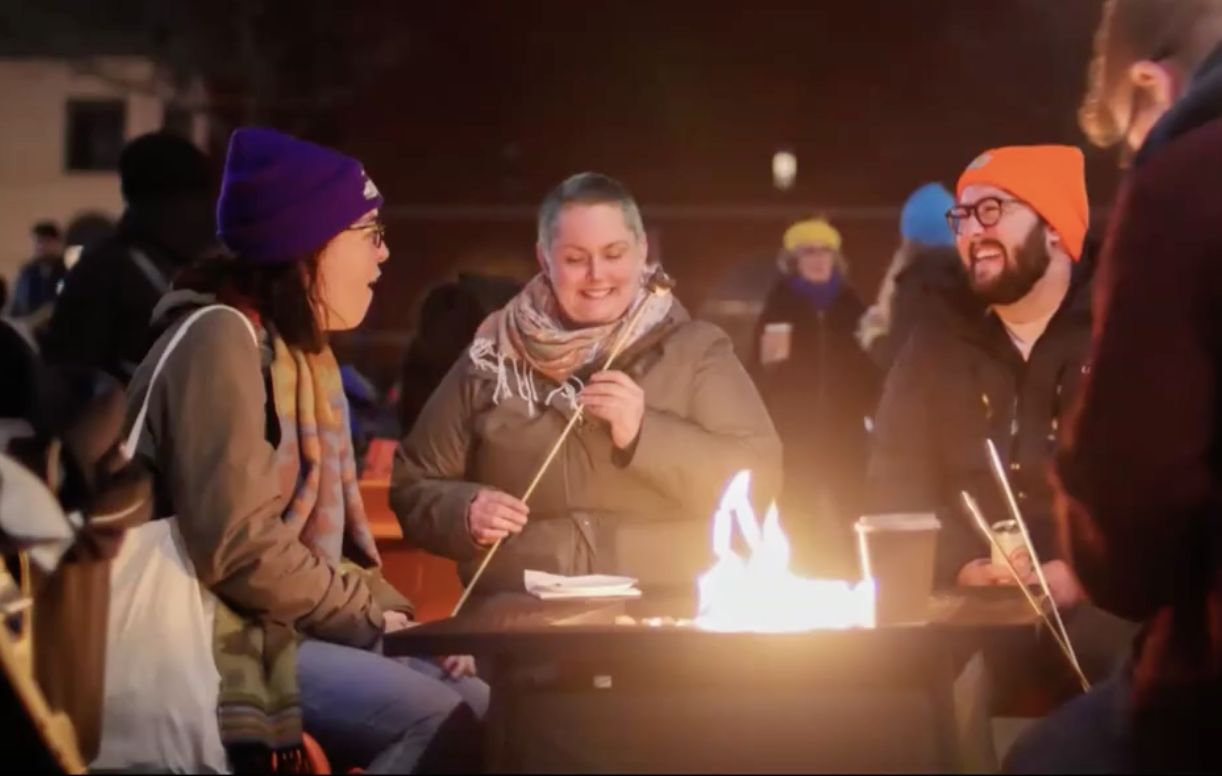
For winter programming, Opperthauser started offering weekly S’mores Nights on Thursdays, 4-6 pm, December through February. He lights three fire pits and provide marshmallows, graham crackers, and chocolate bars. “As far as building connection, this event has to be the most bang for our buck.”
START WITH COMFY SEATS
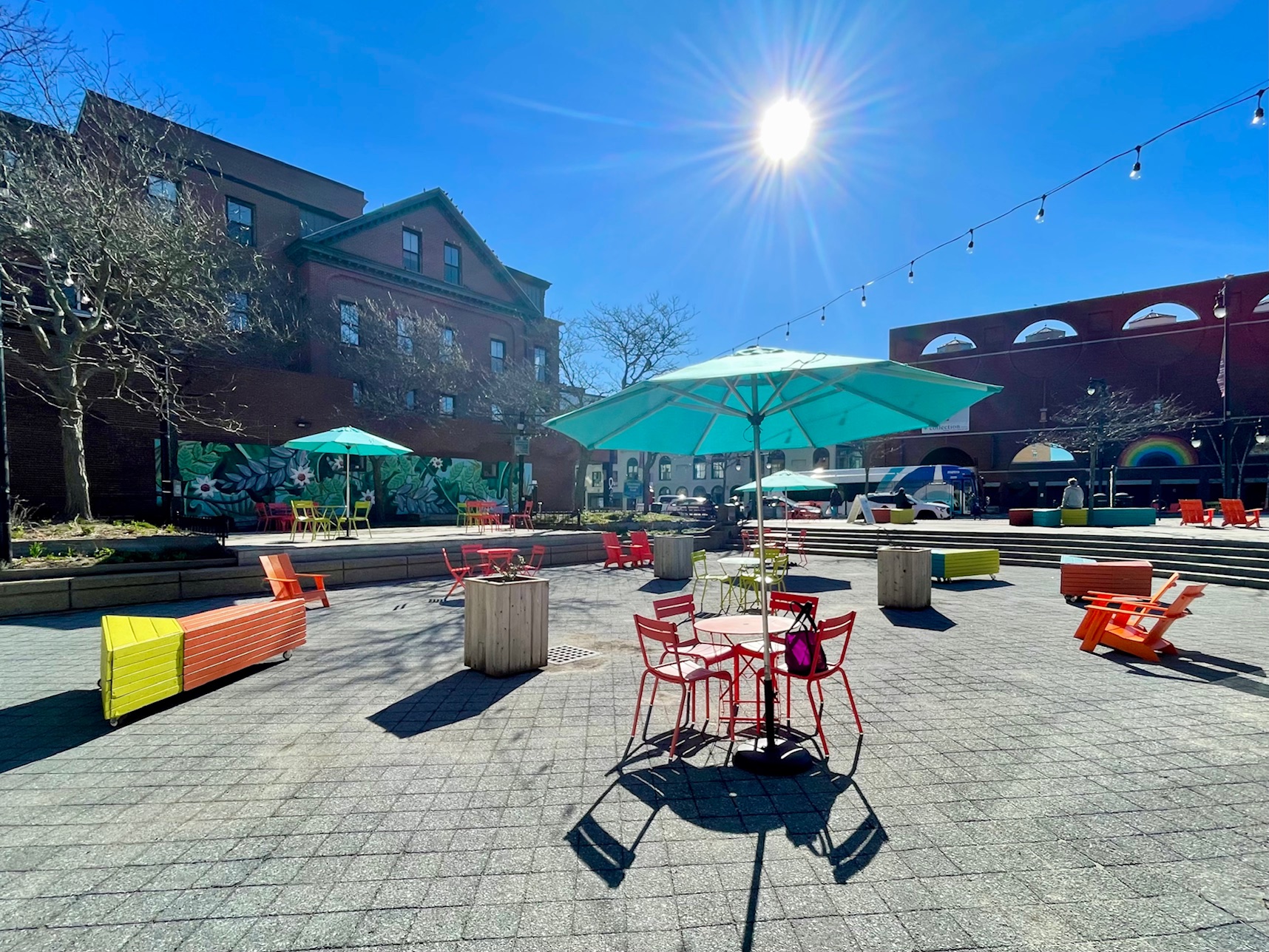
Good seating is the most critical ingredient in the success of a public space, Opperthauser says. Keep the seating malleable, not prescriptive — lightweight tables and chairs, say, that people can move into the sun for warmth or shade to cool down; benches that people can stretch out on and maybe invite their dog up beside them. Make sure the seats are comfortable enough to invite lingering and that they offer a good view.
OPERATIONS
“Events are fun, they kind of punctuate the language of placemaking, they invite people in for an hour or two,” Opperthauser says. “But the public space is live 24/7.” He works to ensure that his park’s minimal amenities — furniture, string lights, planter boxes, portable fire pit/hearters — add vibrancy to the space.
He believes in leaving the park’s furniture out overnight, unlocked. “It conveys the message that the furniture doesn’t belong to the park and we just let you use it for a while, it belongs to everyone,” he says. “We are just the caretakers. In five years we’ve only had two or three pieces of furniture stolen, and I think we recovered two chairs.”
“All of our operations work shows that the place is cared for,” including “waking up” the park in the morning by opening umbrellas, picking up bits of trash, and such, then “tucking it in” at night. “We have cultivated ‘mayors,’ our park regulars, many of whom live nearby, who do the work of keeping an eye on things.”
Unhoused people frequent Congress Square Park and Opperthauser welcomes their visits in general but also for events like S’mores Nights, when he loves to watch social divides being broken over roasting marshmallows. “Unhoused people are as much a part of a community as anyone else,” he says. “You want public spaces to reflect the community.”
HOW TO LAUNCH A THIRD SPACE
You don’t need a large space, big budget, or expensive amenities like fountains to create a well-loved public space, Opperthauser assured roundtable attendees. Here, his basics for getting started:
- Good seating. Start by positioning a few benches and/or picnic tables where they offer people some kind of view and/or fun people watching
- Poll locals on events. Ask your community what kind of events they’d like to see in the space. This way you’re creating community buy-in from the start.
- Evaluate after a few months. If the space doesn’t seem to be working, you can evaluate why and adjust. It’s worth the little experiments and small investments, Opperthauser notes, because these spaces can be the best way to build genuine community.
MORE RESOURCES ON PLACEMAKING & PUBLIC SPACES
- Project for Public Spaces
- PlacemakingUS and PlacemakingX
- The Great Good Place, the original “third places” book with a sequel due out soon