

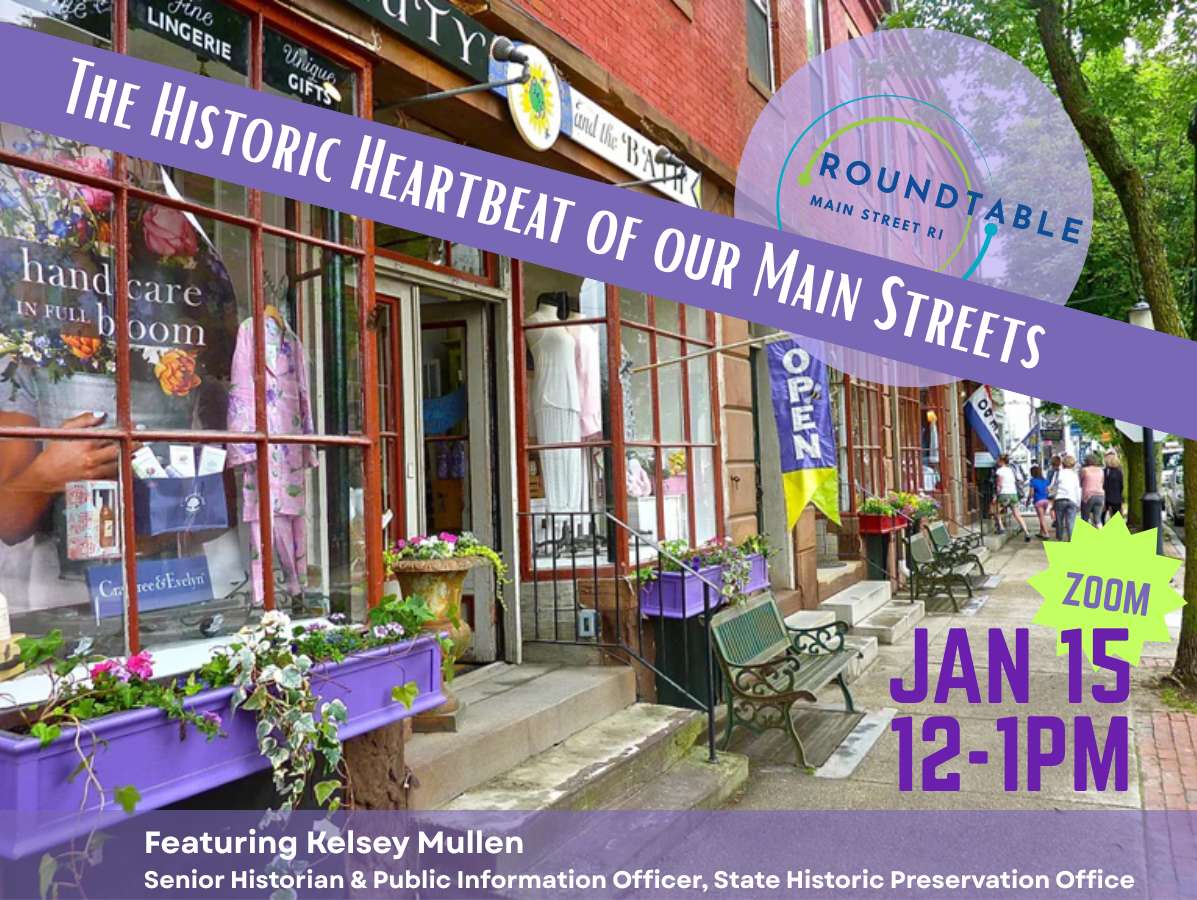
The Historic Heartbeat of our Main Streets
January 15, 2026
12-1PM
Featuring: Kelsey Mullen, Senior Historian & Public Information Officer, State Historic Preservation Office
Picture your favorite downtown, or just the one near where you live. Chances are high that wherever you’re imagining has a high density of historic buildings and streets that reflect decades of growth and change.
Reusing old buildings to serve current needs is central to cultivating a thriving Main Street, and we see examples everywhere in Rhode Island and around the country. In this session, the Rhode Island State Historic Preservation Office will highlight the benefits of preservation as a tool of economic development and demystify how the State’s preservation office approaches Main Street projects. Come with your questions!
RESOURCES
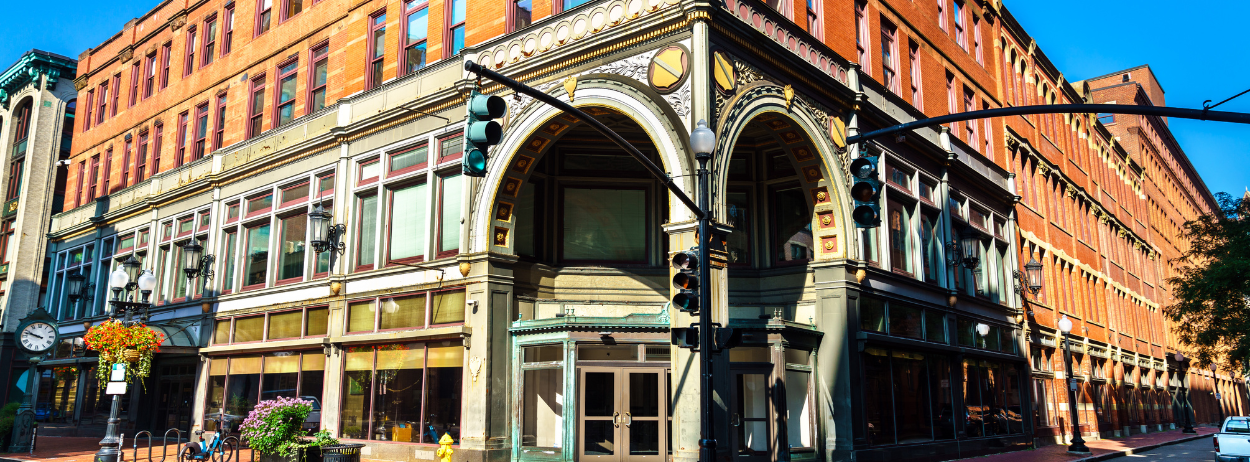
Historic preservation isn’t about freezing places in time — it’s about working with what’s already there to build places people actually want to be.
Historic Buildings Help Create Places People Love
DID YOU KNOW? Rhode Island is the 2nd densest state, with more historic properties per square mile than any other. RI was one of the first states to survey its historic resources and build a preservation movement. What counts as historic? A good benchmark is about 50 years or older.
Myths about Historic Preservation
Nationally:
- In 2023 AIA found a majority (51%) of construction billings were for adaptive reuse (rehabbing old buildings, updating existing buildings) rather than new development.
- Heritage visitors stay longer, visit more places and spend more than other tourists.
- 50% of US residents rate walkability as top priority in choosing where to live.
- Historic areas generally mirror the economic, racial, and ethnic demographics of their city or town, largely due to their density and prevalence of rental housing.
- Resources like libraries, colleges, public art, social services, museums, are twice as numerous in historic corridors than non-historic corridors, and they are home to more small businesses than other areas.
- Historic district property values do better when the market is good, fall later and less steeply in declines, and begin value recovery sooner than other neighborhoods.
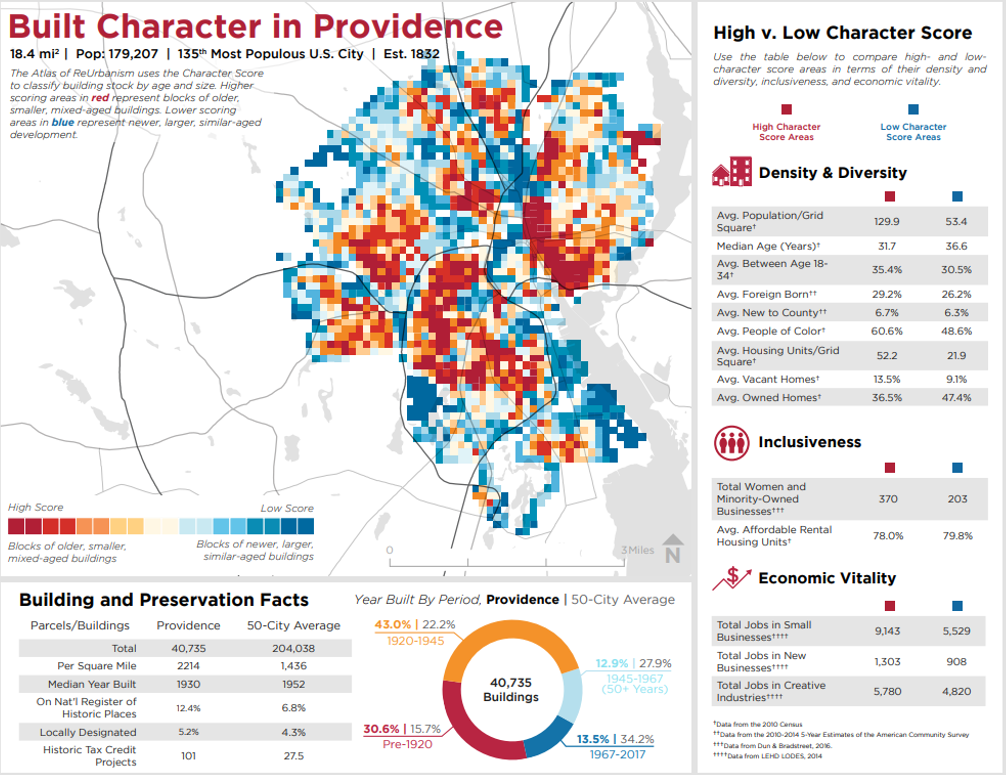
Courtesy of Preservation GreenLab
In Rhode Island:
-
They comprise 1% of state land area but contain 12% of our populace and 4% of the state’s jobs.
-
20% of new housing projects come from historic tax credit funding — busting another myth that historic districts prevent new housing.
-
Since 2010, 56% of RI’s population growth has taken place in local historic districts — a strong signal that people are choosing them on purpose.
- Heritage tourism represents 43% of visitors to RI and they stay longer and spend more.
- 9.8 million heritage tourists annually boost RI’s economy by nearly $1.4 billion.
- Restaurants, hotels, and other employers depend on heritage tourism, with about 26,000 jobs directly linked to the heritage tourism industry.
- The National Trust’s Atlas of ReUrbanism measured urban “character” across 100 cities, examining economic vitality, density and inclusiveness. In Providence RI, older, more historic areas had twice the density, 65% more small business jobs, 44% more jobs in new businesses, and 82% more women and minority owned businesses.
Old Buildings are Green Buildings
Funding for Historic Preservation
State Historic Preservation Programs
Historic Tax Credits
The Bottom Line for our Main Streets
RESOURCES
The Rhode Island Historic Preservation and Heritage Commission has a wealth of helpful tools, resources and other materials available on their website which you should explore. Kelsey also shared the following additional resources, from which she pulled the data cited above:
-
24 Reasons Historic Preservation is Good for Your Community, PlaceEconomics
-
Older, Smaller, Better, Preservation GreenLab
-
Atlas of ReUrbanism, Preservation GreenLab
-
Why Old Places Matter, Tom Mayes
BOOKS
-
Historic Preservation and the Livable City, Eric W. Allison and Lauren Peters
Interested in viewing Kelsey’s slides? You can see them here.
