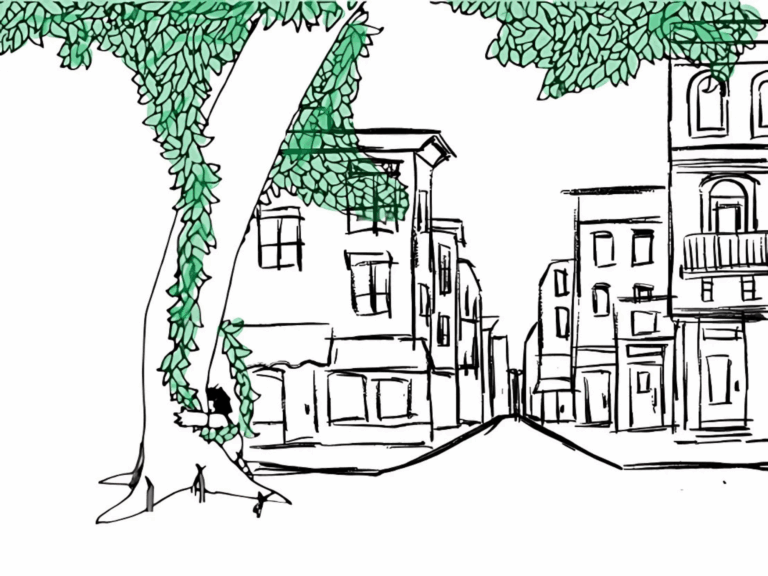
Overcoming the Challenges of Planting Trees in Commercial Districts
While the environmental benefits of street trees are clear, planting them in commercial districts comes with a unique set of challenges where narrow sidewalks, overhead wires, and dense concrete often leave little room for tree planting. Innovative solutions are out there, such as creating “bump outs”—widened sidewalk areas that provide additional space for tree plantings. Whenever possible, it’s important to work with private property owners to plant trees on their land, further expanding green space in urban environments.
The Role of Public Support and Funding
Key to a successful tree planting effort along a commercial corridor is political will, funding, and community buy-in. In Central Falls, the city has secured grants and leveraged partnerships to fund tree planting projects. Public infrastructure programs, such as the Municipal Resilience Program, have enabled the city to integrate green infrastructure and stormwater management into street redesigns.
Make a Maintenance Plan
The survival and health of newly planted trees require adequate watering and pruning. The success of your tree planting program demands consistent attention over time.
Looking Toward the Future
Remember that while street trees are invaluable to the environmental and aesthetic health of commercial districts, their successful integration requires collaboration, careful planning, and an ongoing commitment to maintenance. With the right strategies, urban areas can overcome the challenges posed by limited space and develop greener, more walkable and resilient Main Streets.