
HERE’S WHAT YOU CAN DO RIGHT NOW:
- CONTACT YOUR LEADERS
- LEARN MORE about the Save RIPTA campaign.
- GET INVOLVED with the coalition.
Your voice matters! We built this guide to empower you to stand up for the future of Public Transit in Rhode Island.
STEP 1: RIDE THE BUS

The best way to support our Public Transit system is to USE IT! Whenever you can, take the BUS! Ditch the stress of driving, parking, and being stuck in traffic, feel good about walking/biking/rolling to the bus stop, and save some gas money.
You can traverse all of Rhode Island, for just $2 a ride with free transfers ($6 for unlimited rides over 24 hours using the Wave App!), and kids 5 and under ride for free!
RIPTA might not be perfect, but the only way we can make it better is by investing in the system. So, HOP ON!
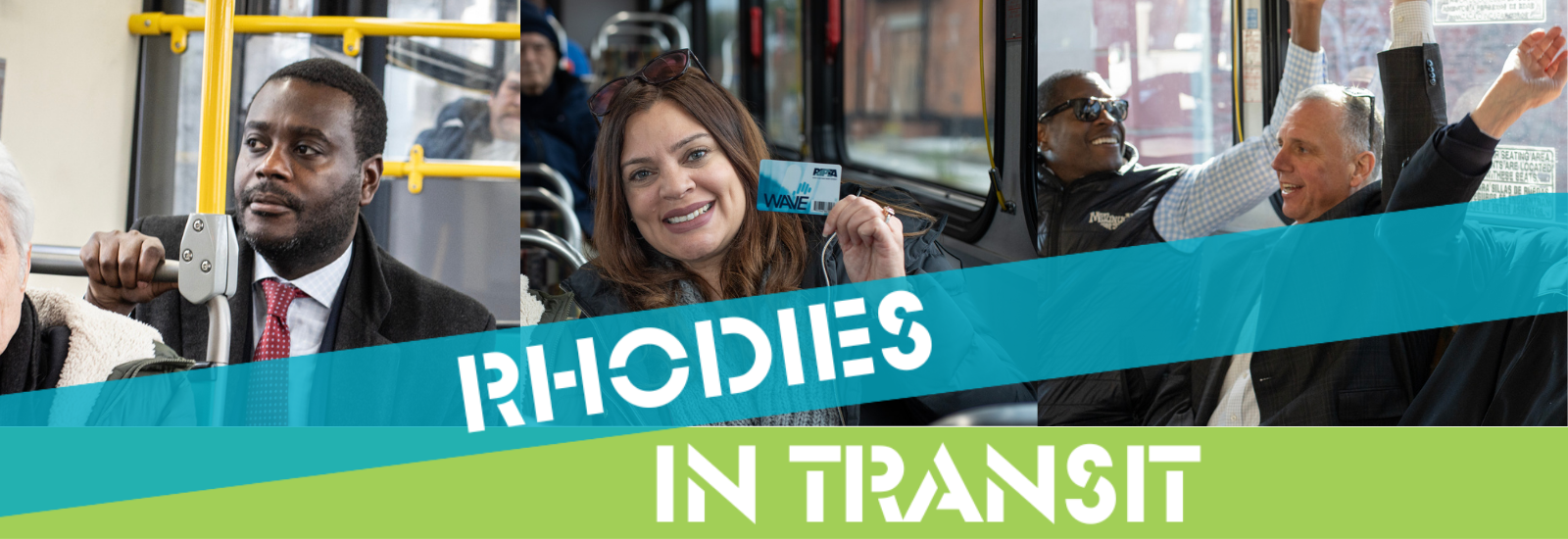
They’re Riding the Bus! Are You?
See who’s on the bus, where they’re going and what they’re saying about the outsized role public transit plays in statewide priorities ranging from housing production and economic development to our environment and public health. Learn More: #RhodiesInTransit
STEP 2: JOIN THE MOVEMENT

What’s Your Advocacy Angle?
Read through the summary of the key initiatives of RI’s Transit Master Plan. What in the Transit Master Plan especially resonates with you and the needs you see in your community?
Improve Existing Services
A key issue right now is that buses do not run often and might not run all day and night. A central goal of the plan is to significantly expand service hours and increase frequency, including the creation of a Frequent Transit Network that will meet your day and night plans. This includes enhancements to the MBTA Providence Line with more trips to T.F. Green Airport, and giving buses priority on the road to make your trip faster.
How would you like to see Existing Service Improved in your Community? How about:
Local Bus, Express Bus, and Flex Service
-
Development of a Frequent Transit Network
-
Extended service hours and increased frequency
-
Transit priority measures like transit lanes, queue jump lanes, signal priority, and bus-on-shoulder service to reduce your travel time
-
Faster and more frequent express bus service.
-
Enhanced Flex service options
Rail Service to and from Boston
-
Faster travel times
-
Increased frequency
Expand Services to New Areas
To bring buses to more people, service would also be expanded to new areas. These improvements will include new local bus routes, crosstown bus routes that avoid Kennedy Plaza, an Amtrak station at TF Green Airport, and Flex service to Quonset Industrial Park.
What are your priorities for New Services? Here are some of the recommendations in the Transit Master Plan:
- Bus services to new areas like Narragannsett and Westerly
- New crosstown bus routes
- Wickford / Quonset Flex Service
- Network of Mobility Hubs
- Amtrak station at TF Green Airport
- Expanded seasonal and special event services
Develop High Capacity Transit
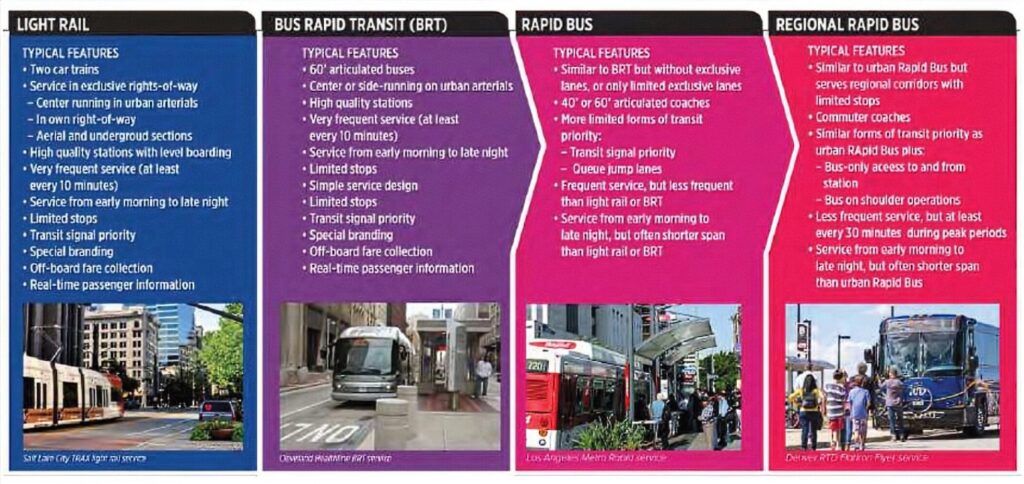
The development of High Capacity Transit Services — Rapid Bus, Bus Rapid Transit, and Light Rail – would make transit in high-demand areas, much more attractive by making it frequent, fast, and reliable.
What does your community see as the priority for High Capacity Transit Services? Read about the defining features of the main services explored in the Transit Master Plan.
Improve Access to Transit
A positive transit experience includes getting to and from transit stops. Transit Forward RI will provide more and better options to get to and from transit comfortably and safely.
Transit Forward RI contains a number of first mile / last mile and micromobility improvements:
- Walking and Rolling: better sidewalks, crosswalks, signage
- Driving: More places to park your car and take transit
- Bicycling: Bike lanes, bikeshare, bike parking
- Other improvements such as:
- Access to Employee Shuttles
- Subsidizing Uber/Lyft rides from Bus Stops
- Access to scooters
In addition, a key to making first mile / last mile connections work will be to ensure that connections can be made at convenient and comfortable locations such as through mobility hubs.
Make Service Easier to Use
RIPTA and RIDOT will adopt new technologies to make the bus easier to use, such as making it easier to pay for the bus, integrating transfers with other providers, and having signs that empower you to know your route. Recommended improvements include such things as:
- Fare Capping
- Easy transfers to MBTA with RIPTA passes.
- Better signs such as digital screens can better inform you.
Check out our Glossary of Transit Terminology
Did you come across any unfamiliar Transit Terms in your reading of the Transit Master Plan? That’s okay! We made a Glossary of key Transit Terms just for you.
WHO TO KNOW

The Rhode Island Public Transit Authority (RIPTA) is the quasi state agency created in 1964 that manages Rhode Island’s statewide public transportation system; one of three statewide systems in the country. It is governed by a board of directors that are appointed by the Governor with the advice and consent of the State Senate. RIPTA’s operations are influenced by the policymakers that govern and fund them.
The RIPTA Board accepts public comment at every monthly meeting!
PARTNERS
Providence Streets Coalition / Save RIPTA Coalition
The Providence Streets Coalition is an alliance of 42 community organizations, local businesses, schools, neighborhood associations, and thousands of engaged individuals advocating for people-friendly streets in Providence. We support providing safer streets, more transportation choices, and policies that advance mobility justice to improve safety, equity, sustainability, prosperity, health, and quality-of-life in our city and region.
Save RIPTA, a campaign of the Providence Streets Coalition is a broad coalition of community organizations, labor unions, legislative champions and everyday Rhode Islanders who are calling upon our state leaders to save and expand RIPTA in our next state budget.
Rhode Island Transit Riders
RI Transit Riders is an independent, volunteer-led, grassroots group that was formed to preserve, expand, and improve public transportation in Rhode Island. Founded in 2010, some of the successful initiatives they were involved in include: stopping fare hikes, securing more RIPTA funding RIPTA, and restoring the no-fare bus pass for seniors and those with disabilities.
POLICYMAKERS
The Office of Governor Dan McKee holds broad Executive Branch Authority over agencies in state government including RIPTA, the Rhode Island Department of Transportation, the State Planning Council, among others. The Governor’s Constituent Service Office provides an opportunity for dialogue with the Governor about the functions of all state agencies, including RIPTA..
The General Assembly holds the authority to pass, amend or repeal state laws governing transportation. The legislature determines the State Budget and can choose to specifically allocate funding, for example, to implement the state’s Transit Master Plan. Representatives and Senators in the General Assembly are there to serve YOU, their constituents.
Using your address, you can connect with your representatives in the General Assembly HERE.
The RI State Planning Council sets planning goals and policies. As RI’s designated Metropolitan Planning Organization, it also adopts the State Transportation Improvement Program —a ten-year, budgeted plan for transportation investments.
The Council accepts public comment at every monthly meeting!
The Transportation Advisory Committee (TAC), a subcommittee of the State Planning Council, advises on transportation planning and reviews key documents like the Long-Range Transportation Plan.
The Committee accepts public comment at every monthly meeting!
City and Town Councils have decision making authority at the local level. This means if you’re advocating for dedicated bus lanes on municipally owned roads, or if you’re advocating for the development of a Mobility Hub (one of the Transit Master Plan strategies), you’ll want to engage your local Council representatives to earn their support.
A municipal Planning Board guides orderly community growth by developing a Comprehensive Plan and advising the city or town council on land use, transportation, and development to support long-term community goals.
TransitForward RI 2040 lays out a bold plan, now all we need is the will to make it real. But public transit funding is under attack in Rhode Island. This sets us back on our progress and prevents us from achieving our goals.
Tell Your Story. Mobilize Your Community. Demand Investment. Save RIPTA.
We’re counting on YOU! You have many ways to be heard in government: vote, attend public meetings, testify at hearings, and more. Our Advocacy Guides will help you get started but take immediate action NOW to save RIPTA as we know it.
Need Further Inspiration?
In the 2025 elections, voters across the country agreed to fund $11 BILLION for transit.
In total in 2025, 16 out of 19 ballot measures passed, resulting in an 84% win rate and $11,773,346,495 in public transit funding for continued operations, new infrastructure, and service expansions. Some of these include:
- Voters in Charlotte, NC, said ‘yes’ to investing in a future transit system that serves commuters’ needs
- Ellensburg, WA residents supported Prop 1 to keep all services running, deliver planned service upgrades, support ridership growth, and more.
- Kalamazoo, MI voters said “Yes” to a measure renewing and increasing the millage to keep buses, Metro Connect, and Metro Link running, while sustaining service levels and expanding access.
Pro-Transit Candidates Win across 2025 Elections
New York City: Zohran Mamdani, on a campaign that promises fast and fare-free buses, transit-oriented housing, and the elimination of parking requirements, won the NYC Mayoral Election by nearly 180,000 votes.
New Jersey: Mickie Sherell won the New Jersey Gubernatorial Election with a pledge to gain federal funding for transportation infrastructure.
Seattle: Katie Wilson, co-founder and Executive Director for Seattle’s Transit Rider Union, won the Mayoral Election in Seattle.