

Downtown Woonsocket Invites You to Visit — and Stay
The city that once said ‘bienvenu’ to French Canadians seeking mill jobs now welcomes new businesses and residents as part of its historic Main Street district revival
By Lisa Watts
Raise your hand if you live in Rhode Island and can’t remember the last time you visited Woonsocket. It’s been a while, right? Or maybe never?
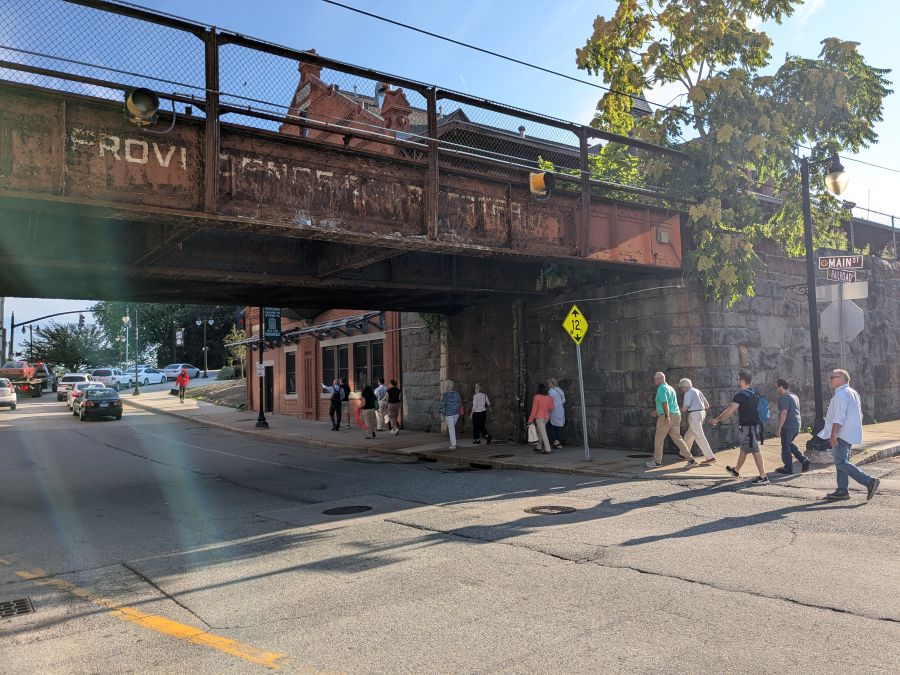
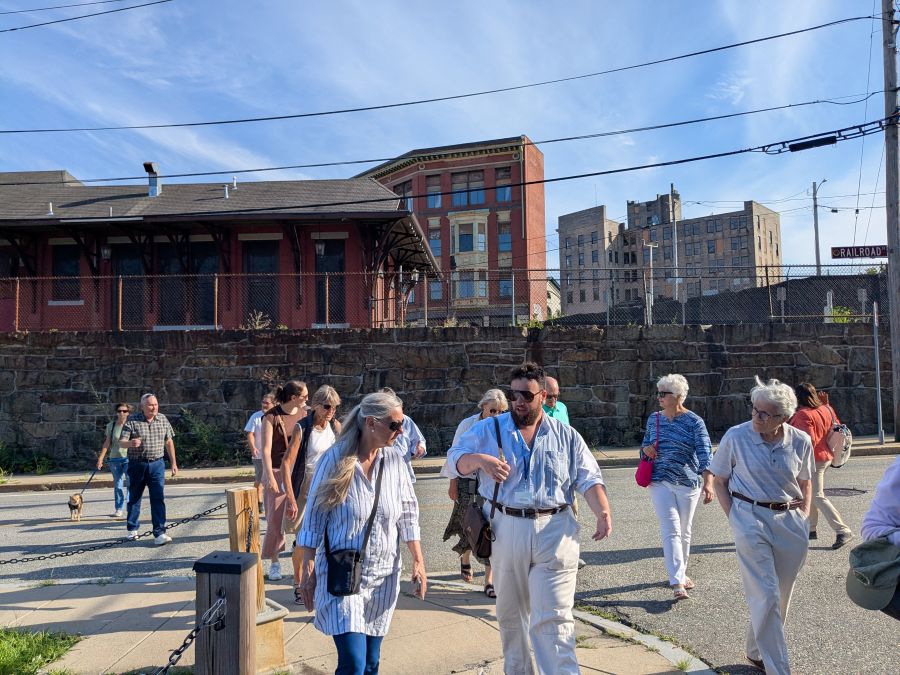
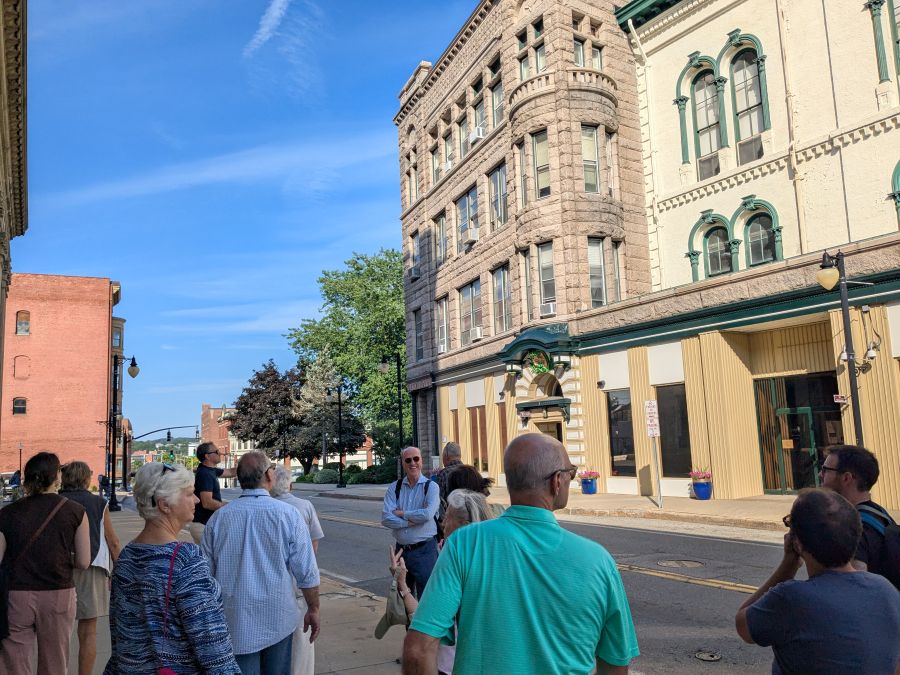
It’s OK, you’re not alone. But Garrett Mancieri and his fellow board members at Downtown Woonsocket Collaborative want to change that. For ten years the Collaborative has been working to rejuvenate the once-thriving textile mill town. Their efforts are focused on the roughly one-mile long Main Street district and include encouraging new housing and business spaces to be built downtown. After attracting two multi-million dollar renovation projects, the momentum is picking up. Downtown Woonsocket’s vacancy rate of 50 percent in 2015 has dropped to about 18 percent now, without counting the residential spaces that have been added.
“People are starting to believe in this,” Mancieri says of the revitalization momentum.
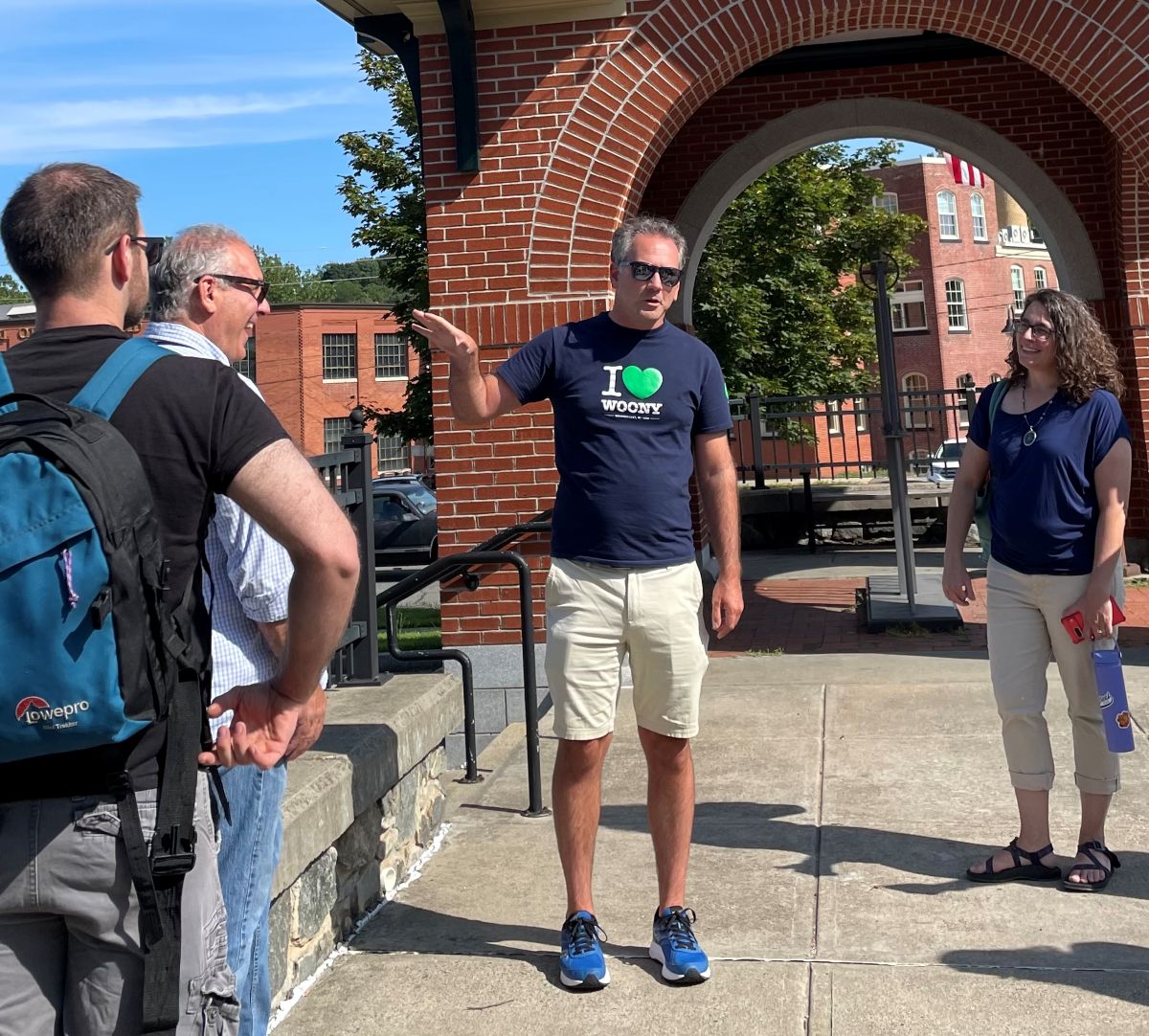
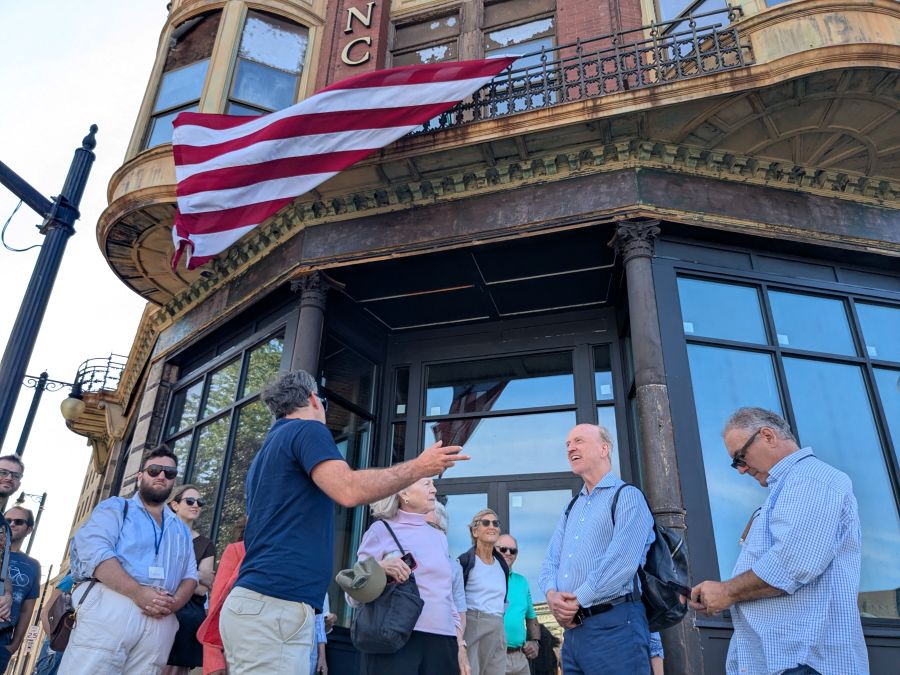
Garrett Mancieri, chair of the Downtown Woonsocket Collaborative, leads a walking tour of his city
When he started working in commercial and residential real estate 18 years ago, Mancieri chose to focus on downtown Woonsocket. “Everyone told me I was wasting my time, that no one would want to live downtown or open a business here. Now they tour some of the new apartment units and say, ‘Oh my god, this is Woonsocket?’”
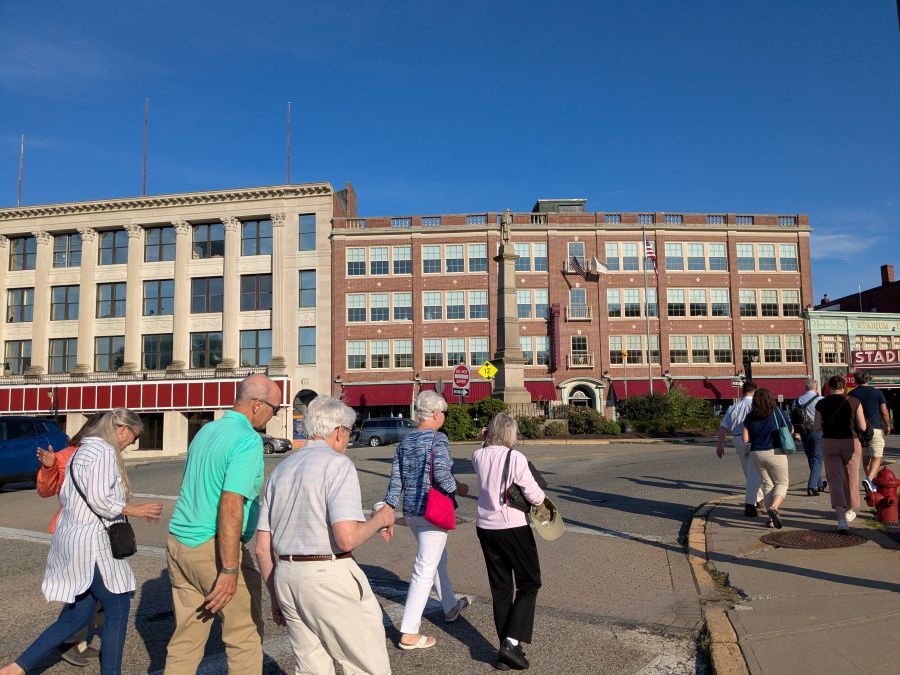
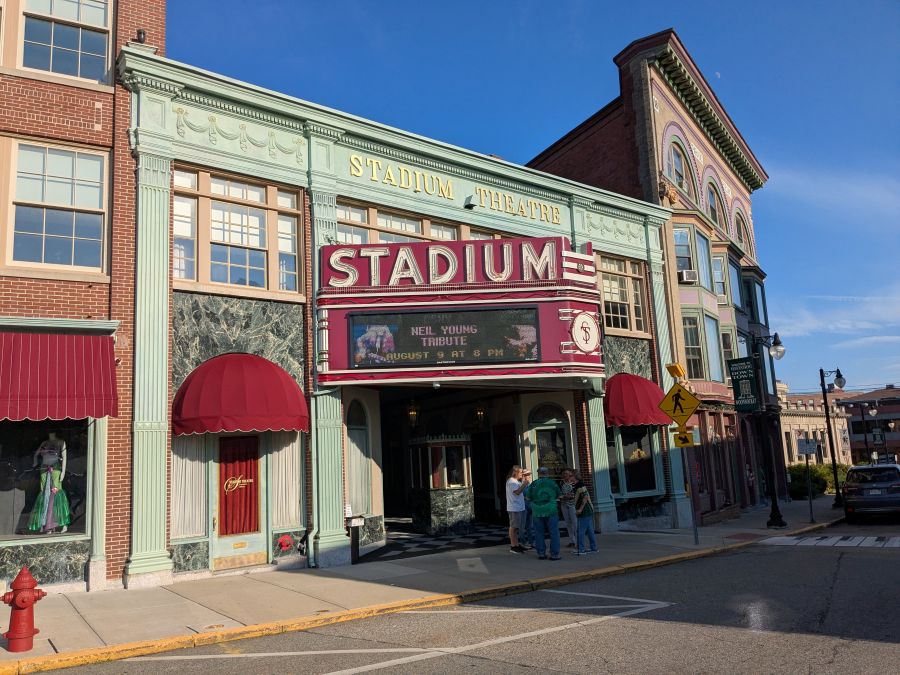
In the last decade the city’s downtown has seen a brewery, a food incubator and event space, and an educational training center open downtown among other new businesses, joining beloved destinations such as the Stadium Theatre and Chan’s, known for its live music shows served up along with its menu of Chinese favorites.
“People love the changes,” Mancieri says. “And now we’re offering affordable new living spaces just 15 minutes from Providence and an hour from Boston.”
Encouraging more downtown density
Much of Woonsocket’s history is tied to its location along the Blackstone River and its role in the Industrial Revolution. Originally inhabited by the Nipmuc, Wampanoag, and Narragansett tribes, the city may have been named for “the place of the steep,” a nod to the sizable hills that climb up from the river’s banks. In the 1800s, the river was used to power a growing concentration of mills. The mills attracted French Canadian immigrants seeking work in the textile industry, a story told by the Museum of Work & Culture, itself located in a restored mill at 42 South Main Street. Immersive exhibits recreate the immigrants’ journey to the Blackstone River valley, beginning in a Quebecois farmhouse and depicting their home, work, and school life in Woonsocket at the turn of the century. Like much of Rhode Island, the city experienced the height of its prosperity between 1850 and 1930, when most New England textile mills had closed and moved south.
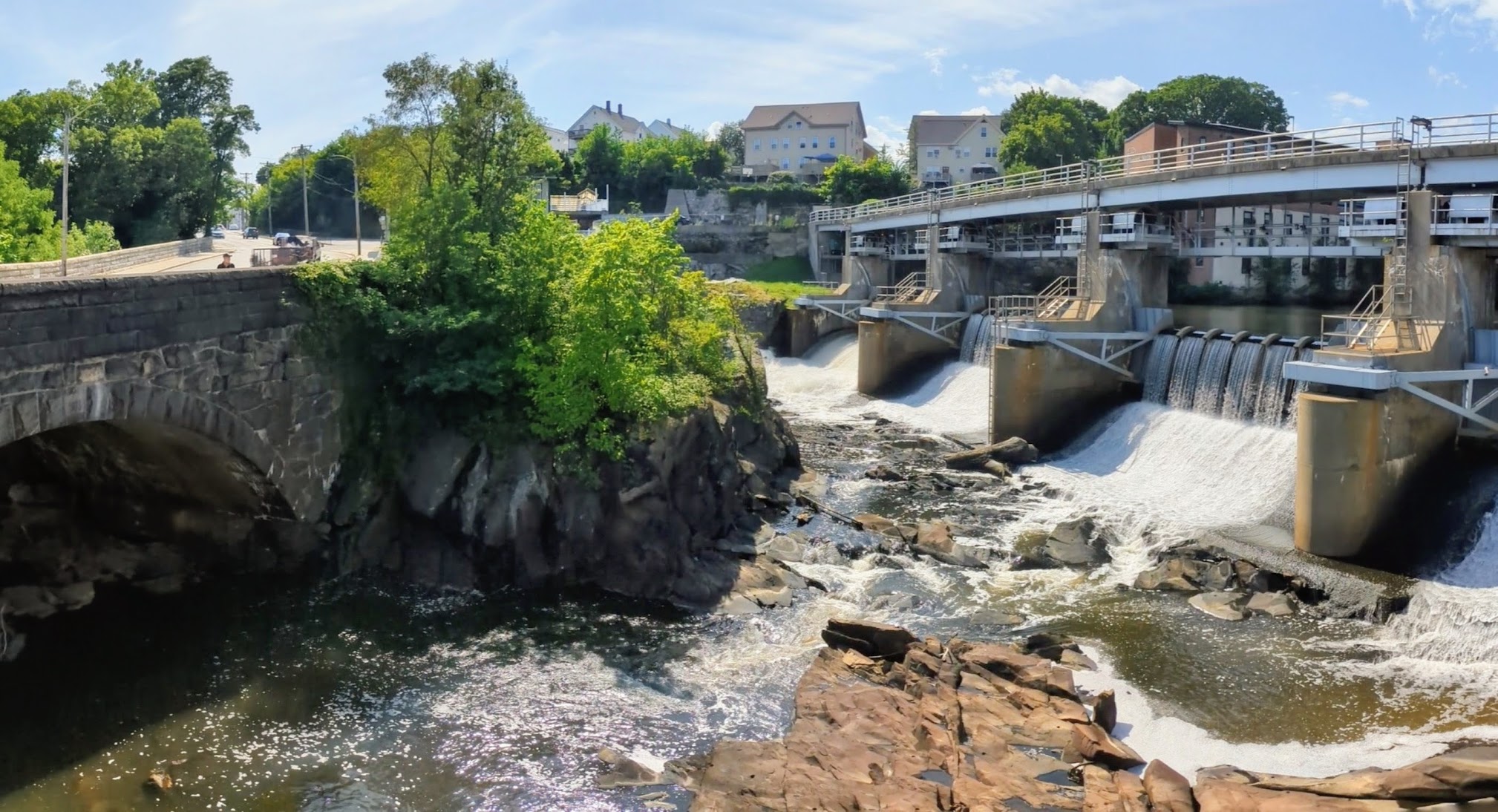
Converting large mill buildings—which often have sat empty for years—takes “an awful lot of money,” Mancieri says. “The real estate itself is affordable, you can pick up these older buildings for good prices. The cost comes in the renovation work. Still, it’s more affordable to rehab than to build something new, where the building codes are so much stricter.”
One key to successfully drawing developers to renovate downtown properties was the city’s passage of a downtown overlay district. Approved by the city council 10 years ago, the new district overlay eases a number of zoning restrictions such as reducing required parking for downtown residential units from two to one spaces per unit. The district welcomes a wide range of businesses from hotels, bars, and theaters to live/work units, artist studios, galleries, nonprofit agencies, and educational institutions.
Along with the overlay district, Mancieri credits city administrators and the city council for working with the Downtown Woonsocket Collaborative to streamline processes such as building inspections. “It helps to have those two branches of local government pretty much on your side,” he says. Community support also helps. He encourages developers to rally community members to testify before city council about projects they support. “People love Main Street, especially our seniors,” he says. “They want to drive down Main Street and see the buildings they remember, to see these pieces of history live on. It’s so important to keep the stories alive. If the next generation doesn’t know these stories, they’ll say we should just knock down the old buildings. And the last thing we want to see in Woonsocket is these buildings being turned into parking lots.”
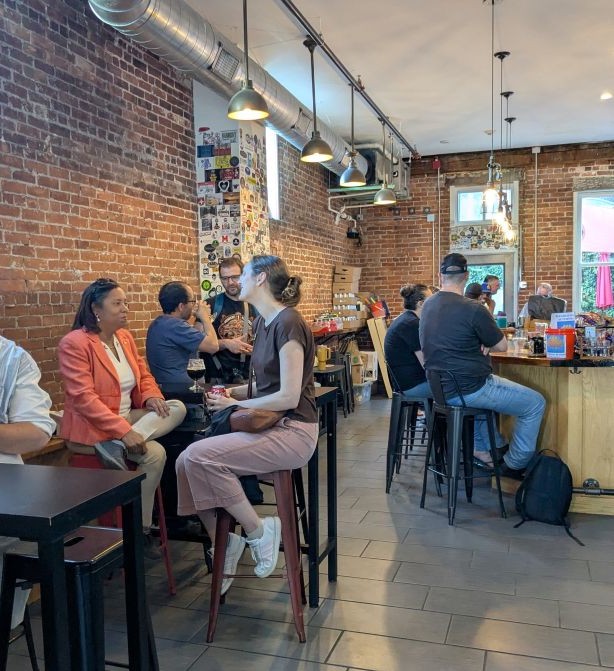
Lops Brewing opened in 2019 at 122 North Main Street.
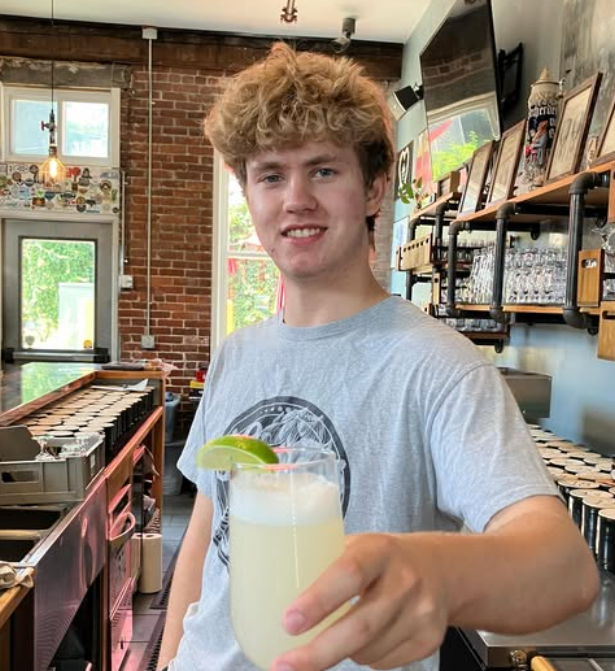
photo courtesy of Lops Brewing
A tear-down was almost the fate of 122 North Main Street. The circa 1891 building was on the verge of being condemned when business partners John Messier and Leszek “Les” Przybylko saw its potential. The developers won a Smart Growth RI Outstanding Growth award in 2020 for renovating the four-story building into 17 apartment units and two commercial spaces on the first floor. In the summer of 2019, Sean Lopolito opened Lops Brewing in the left-hand commercial space and the building’s basement. The brewery features the original brick along its north wall and a bar top made from the original wood flooring. A nonprofit rents the other commercial space.
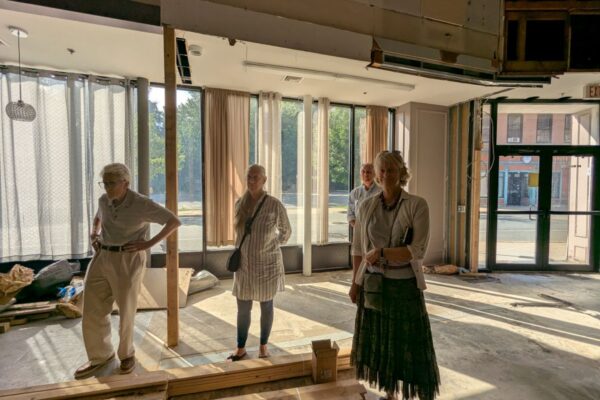
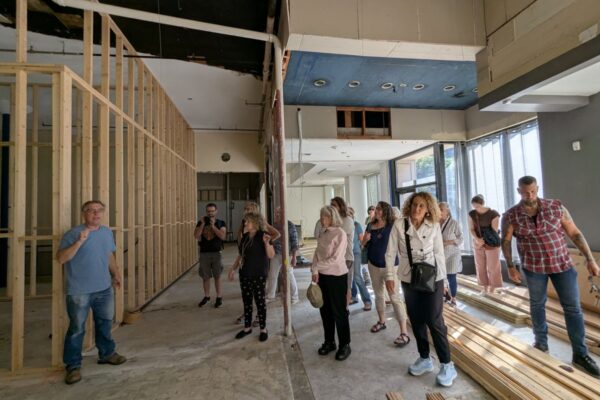
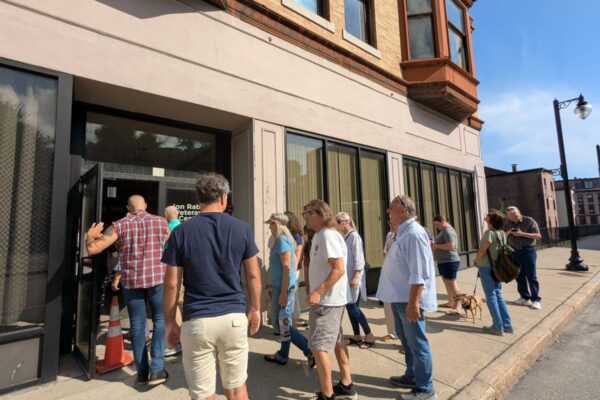
Touring 55-75 Main Street
Messier and Przybylko are now undertaking an enormous mixed-use development at 55-75 Main Street. The project merges two buildings—the former home of The Call newspaper and the former Kornstein’s department store. The developers are creating first-floor commercial spaces with 70-plus apartment units on the three upper floors. Plans call for displaying part of a printing press and a water wheel, both recovered during the renovation work, in the completed building. The developers predict they’ll complete the project in 2027.
The unique opportunity to revive the building where the Call was headquartered for nearly 100 years isn’t lost on Przybylko. As he told the Valley Breeze newspaper, “I’m from Woonsocket, so getting The Call building is awesome.”
‘We can do that again’
Mancieri was born in Woonsocket but grew up in neighboring Cumberland. As a child he loved his grandmother’s stories about her hometown. “She told me so many stories about how downtown Woonsocket used to be the mecca, the place where everyone wanted to come. I told her, ‘We can do that again.’
“I built my real estate business by telling Main Street business people, ‘Let me market downtown.’ I fell in love with it. I started going to Main Street America [the nonprofit that champions the movement to reenergize and strengthen older and historic downtowns and neighborhood commercial districts nationwide] conferences.”
In 2015 the city asked Mancieri and a few other business leaders to revive an organization that began as Main Street 2000 but had since folded. Now he chairs the Downtown Woonsocket Collaborative and works with his fellow volunteer board members to showcase and celebrate their city and its history, culture, and architecture and create a welcoming space for residents, businesses, and visitors.
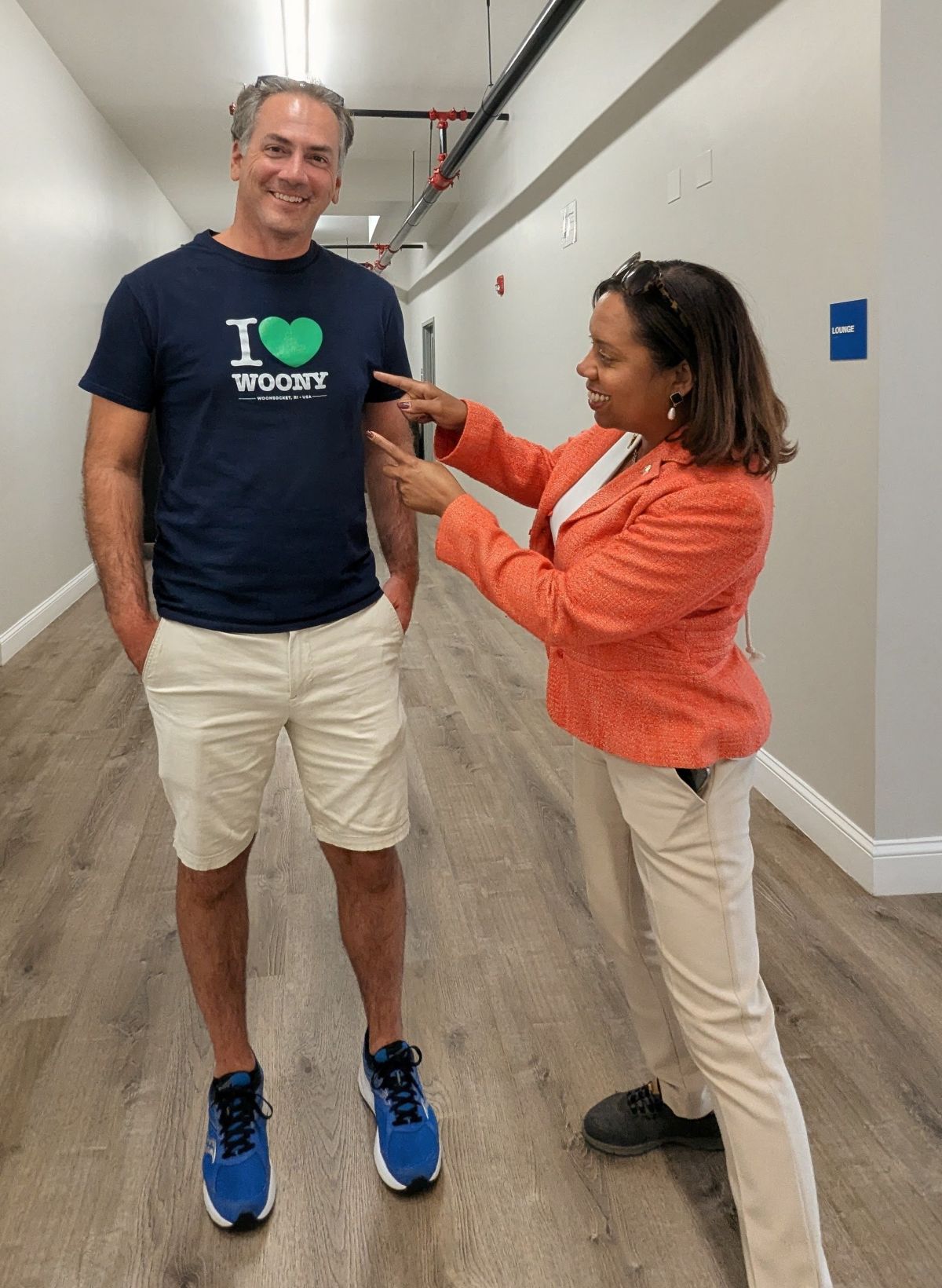
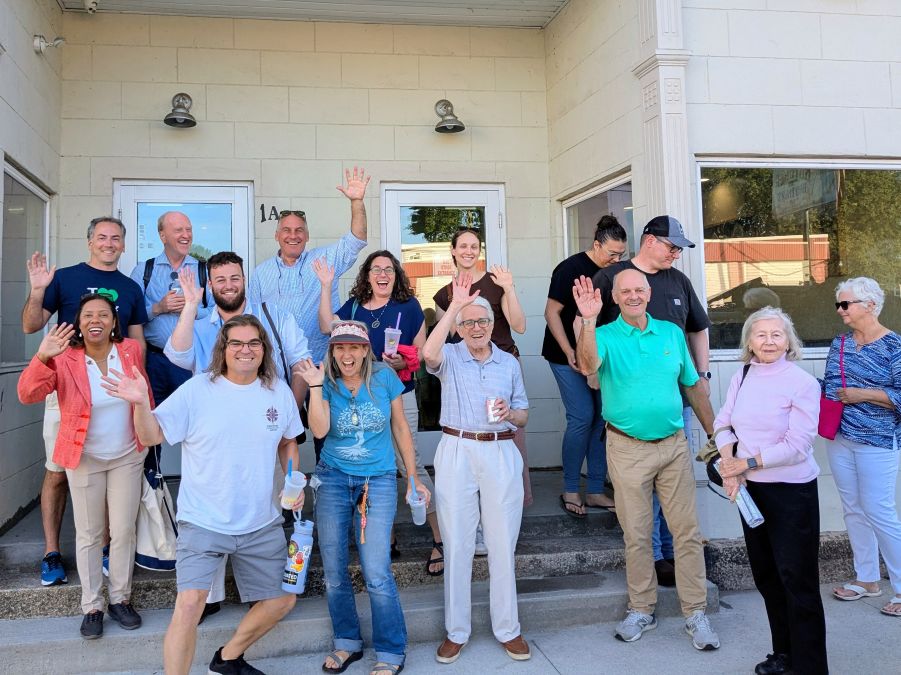
Mancieri with Lt. Governor Sabina Matos who joined the tour
So, about that visit to Woonsocket you’ve been meaning to take. Mancieri offers a few ideas on spending a perfect day in his city—a day in which you won’t go hungry or get dehydrated.
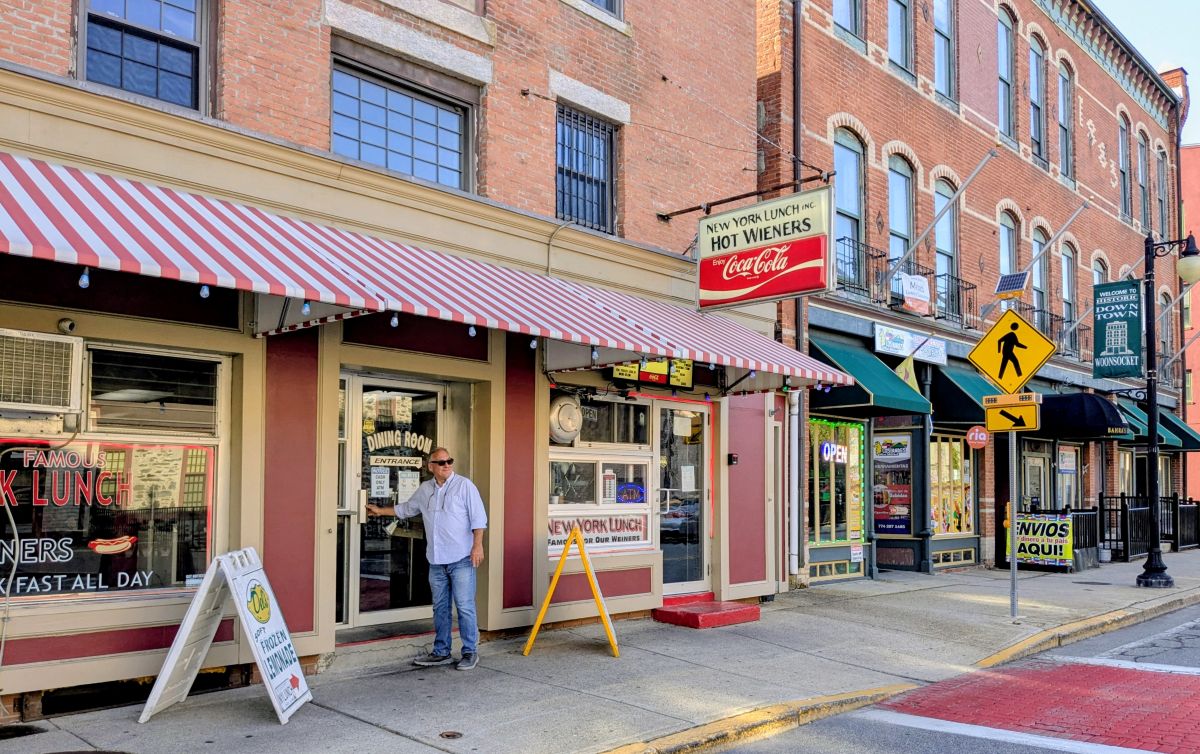
“Have breakfast at Alda’s Cafe, formerly the Main Street Cafe, at 85 Main Street,” he says. “Then walk down to the river to check out River Island Art Park and see its beautiful new stage. Then take a tour of the Museum of Work & Culture. Head a block away to River Falls (in a restored stone mill along the river) for lunch, then stroll down Main Street. You could go to Chan’s for a drink or head up North Main Street and pop into Lops Brewing. Have dinner at Ciro’s Tavern outside on the patio for dinner, then take in a show at Stadium Theatre. Finally, head down North Main to Little Lena’s for a nightcap.”
Or you could buy tickets to the Downtown Woonsocket Collaborative’s Twilight on the Blackstone on Saturday, August 23. Enjoy a multi-course dinner served under twinkling lights on the Court Street Bridge while supporting the city’s revitalization efforts. The Collaborate calls Twilight on the Blackstone a “one-of-a-kind open-air dining experience set atop the historic Court Street Bridge.
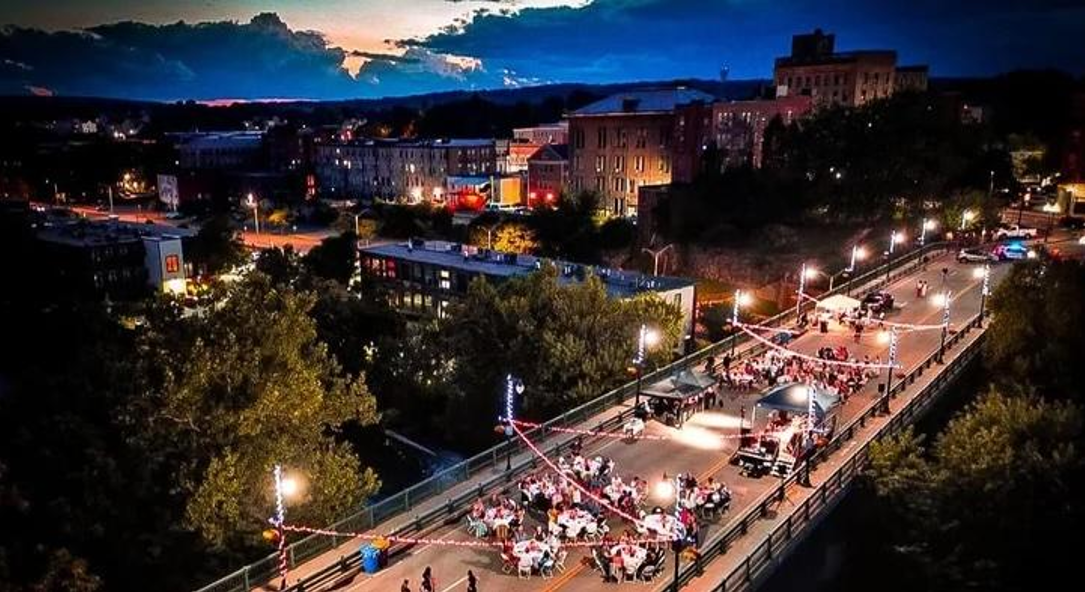
Enjoy a delicious multi-course dinner and desserts prepared by acclaimed local chef Mike Heroux and his daughter Haley. This year, Ciro’s will be on-site providing exceptional bar service throughout the evening. Live entertainment will be provided by one of Rhode Island’s favorite bands.” Learn more and buy tickets