

Bringing Farmers Markets to your Main Street
Thursday September 18, 2025
12-1PM
With guest Presenter Thea Upham, Nutrition Incentive Projects Director, Farm Fresh Rhode Island
We’re so lucky to have both food-producing farms and a local non-profit organization like Farm Fresh Rhode Island to connect growers with communities! Because of this, many of us have had the opportunity to purchase fresh produce and other local products at nearby farmers markets. We’ve also seen how markets can help connect communities and drive other positive outcomes in public health, social connection, and economic impact.
Have you ever wondered how these markets work or what would need to happen to set one up in your area? Or maybe you want to help make your existing market more successful or better integrate it into your community’s activities? Join us for a conversation about what it takes to start a farmers market or deepen partnership with existing markets in commercial districts with RI’s farm to market experts!
RESOURCES
About Farm Fresh RI
Benefits of Bringing a Farmers Market to your Community:
- Supports local farmers by boosting sales and stimulating local economic growth.
-
Expands food access for residents, offering fresh, healthy, locally grown options.
-
Builds community by creating a shared, welcoming space where people connect.
-
Promotes public health by encouraging nutritious eating habits and outdoor activity.
-
Advances environmental sustainability by protecting farmland and green spaces, reducing food miles, and helping mitigate climate change.

DID YOU KNOW that Rhode Island has the most expensive farmland in the country?
And according to latest agricultural census — Rhode Island is home to some of the most new and beginning farmers. These farmers are small in scale, leaving them especially dependent on direct consumer sales, making farmers markets and farm stands critical state infrastructure.
Farmers Market Management Structures in Rhode Island
While many assume Farm Fresh Rhode Island manages all of the state’s farmers markets, it actually operates only a portion of them and works within a broader network of market organizers. Markets across Rhode Island are managed by a range of entities — including state agencies like the Department of Environmental Management, municipal governments, and local partners such as libraries and town councils. Many are run by nonprofit organizations such as land trusts, housing groups, and economic development organizations, while others are managed by private businesses like shopping centers or even breweries. In several cases, the markets are self-managed by the vendors themselves, who form cooperative boards to oversee operations — a model used at markets like the Hope Street market in Providence or Pawtuxet Village market in Cranston.
The Farmers Market Death Cycle
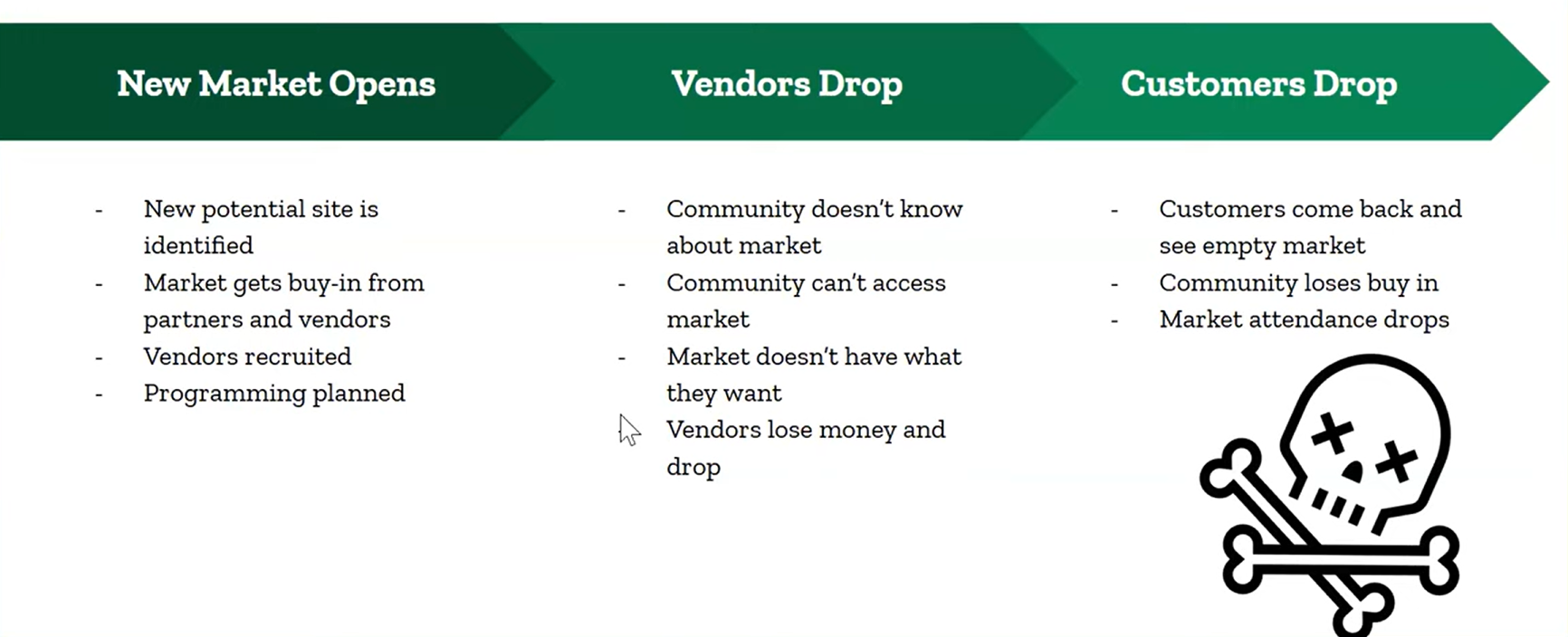
image courtesy of Thea Upham of Farm Fresh RI
When farmers markets work well, they can be transformational to a community, but more often than not new farmers markets fail. There are so many factors involved in making a farmers market succeed and it needs to be successful from the beginning, otherwise new markets fall into a death cycle. This isn’t to say that you shouldn’t open a farmers market — but before you do assess if the need for the market is really there, and ensure that you’re fully set up for success.
What’s Involved in Running a Successful Farmers Market?
CONSIDER THE STRUCTURE OF YOUR MARKET:
Business Entity
- LLC, Corporation, Nonprofit, etc.
Management Administration
- Management Board or “friends of the market”
- Hire part-time market manager
- within existing full-time role of another organization
MARKETING BUDGETING
-
Insurance & Permits
-
Site Supplies and Signage
-
Programming Expenses
-
Advertising & Outreach
-
Time & Effort towards everything from vendor and event coordination to overseeing outreach and marketing.
- Market Booth Rental Income
Note: Farm Fresh RI recommends charging at least a small fee to vendors as a way for them to buy into the success of the market. This could take the form of taking a deposit at the beginning of the season to be returned at the season’s end based off of how often they attended. Otherwise, your vendors are less likely to show up.
CONSIDER LOCATION / SEASON & TIMING
- Is there another market already operating near by?
-
Are people actually ready to buy groceries when visiting this location?
-
What other programs or events can you leverage at the same time?
-
Is there parking for vendors, staff and shoppers?
-
Is there an easy way for vendors to load in and out?
-
Will customers feel safe shopping?
-
Are people only in this location seasonally?
-
How early should the market open and how late will it end?
MAKE SURE YOU BRING PASSION!
Already Have a Market? Consider Ways to Make it Better!
Make Use of these Incentive Programs!
-
Farm Fresh RI Fresh Bucks (SNAP): Farm Fresh RI fundraises to match SNAP benefits dollar for dollar!
-
RI DOH WIC FMNP: Women Infant and Children, Farmers Market Nutrition Program
-
RI DEM Senior FMNP: Senior Farmers Market Nutrition Program
-
Worksite Wellness Programs (through local businesses for employees)
Engagement Programs
-
Consider hosting live musicians!
-
Conduct taste-tests
-
Offer recipe cards and cooking demonstrations
-
Organize scavenger hunts
-
Offer shopping passports or punch-cards
-
Organize kids activities
-
Provide space for community partner info tables
Value-Added & Non-Food Products
-
Offer “Buy-In” products — sell products you don’t have vendors for to help round out your market’s offerings (boxes of dried pasta etc.)
-
Consider if you want to host craft and artisan vendors