Congratulations to our 2026 RI Main Street Learning Cohort!
Participants represented 11 municipalities and over 20 main streets across the state. They joined us from local government, neighborhood associations, community development nonprofits, small businesses, and more — all connected by the desire to promote and strengthen their local main streets.
Applications for our 2027 Cohort open this October. In the meantime, check out our recap for 2026.
Are You Ready to Take Action on Behalf of Your Commercial District?
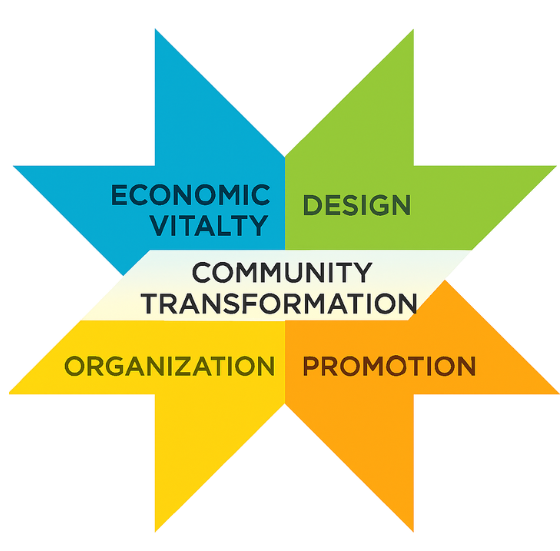
In partnership with professionals from Main Street America, we’re excited to offer workshops that will discuss actual processes for implementing the proven Four Point approach to main street revitalization and explore different transformation strategies.
This “learning cohort” is designed for groups of people from different communities around RI, with each session providing suggested action items to translate talk into concrete steps forward. We’re encouraging communities to apply as a team composed of multiple organizations and/or dedicated individuals.
The program is primarily about learning – there’s no commitment beyond the period of the cohort, and the only cost to participate is one general organizational membership to Main Street America per team (offered at the discount rate of $150 for one year, which includes up to six logins. NOTE: a membership is not required to apply and will be arranged after cohort participants are selected.)
CURRICULUM
Design
Design supports community transformation by strengthening the physical and visual assets that set a commercial district apart. This session surveys key Main Street design topics—from Historic Preservation 101 and the history of downtown development to design tools, resources, and incentives. Participants will gain practical knowledge in design, preservation, and planning, along with first-step projects they can implement locally. We’ll explore placemaking, accessibility, equity, and safety, and share strategies for intentional public engagement in the design process, highlighting partners and resources that champion people-centered design.
OUTCOMES: Participants demonstrate increased knowledge of how to apply design principles for historic preservation to celebrate anchor buildings, and how design serves economic development, such as increasing foot traffic into businesses.


Economic Vitality
Economic Vitality focuses on capital, incentives, and other economic and financial tools to assist new and existing businesses, catalyze property development, and create a supportive environment for entrepreneurs and innovators that drive local economies. This workshop is a primer in asset based economic development and how the Main Street Approach creates a wrap-around strategy for a locally sustained small business economy. This participatory workshop will include an asset assessment of participants’ own community and guidance for developing a catalyst strategy that celebrates local businesses, local culture, and local historic preservation.
OUTCOMES: Participants demonstrate increased knowledge of how to apply small business development tactics to their own communities.
Promotion
Promotion positions the downtown or commercial district as the center of the community and hub of economic activity, while creating a positive image that showcases a community’s unique characteristics. Downtown organizations are great at hosting special events and festivals, but they are often lacking in making retail/business promotions, marketing, and image-building activities a complimentary part of the Promotion Committee work plan. This session is focused on getting the Promotion Committee to develop a comprehensive promotional calendar targeted at market opportunities. This session will also cover business promotions that “make the cash registers ring” versus the events that encourage people to be outside businesses. Promotions will include retail, service, and professional sectors. Over 50 successful retail/business promotions are presented.
OUTCOMES: In survey data, participants demonstrate increased knowledge of how to effectively build a promotion strategy around historic anchors, local culture, small businesses, and community celebrations.


Organization
Organization involves creating a strong foundation for a sustainable revitalization effort, including cultivating partnerships, community involvement, and resources for the district. This workshop will explain the four committees required of a Main Street Program board and their responsibilities. Committees are the backbone of a Main Street program, providing the workers who actually “roll up their sleeves” and do the work, from planning to project implementation. This training looks at ways to identify the best committee member candidates as well as committee-specific work planning.
OUTCOMES: Participants demonstrate increased knowledge of how to structure and sustain a leadership team to fully take advantage of the Four Point Approach that has been successfully used by over 2,000 towns and cities over the last 45 years.