
ROUNDTABLE
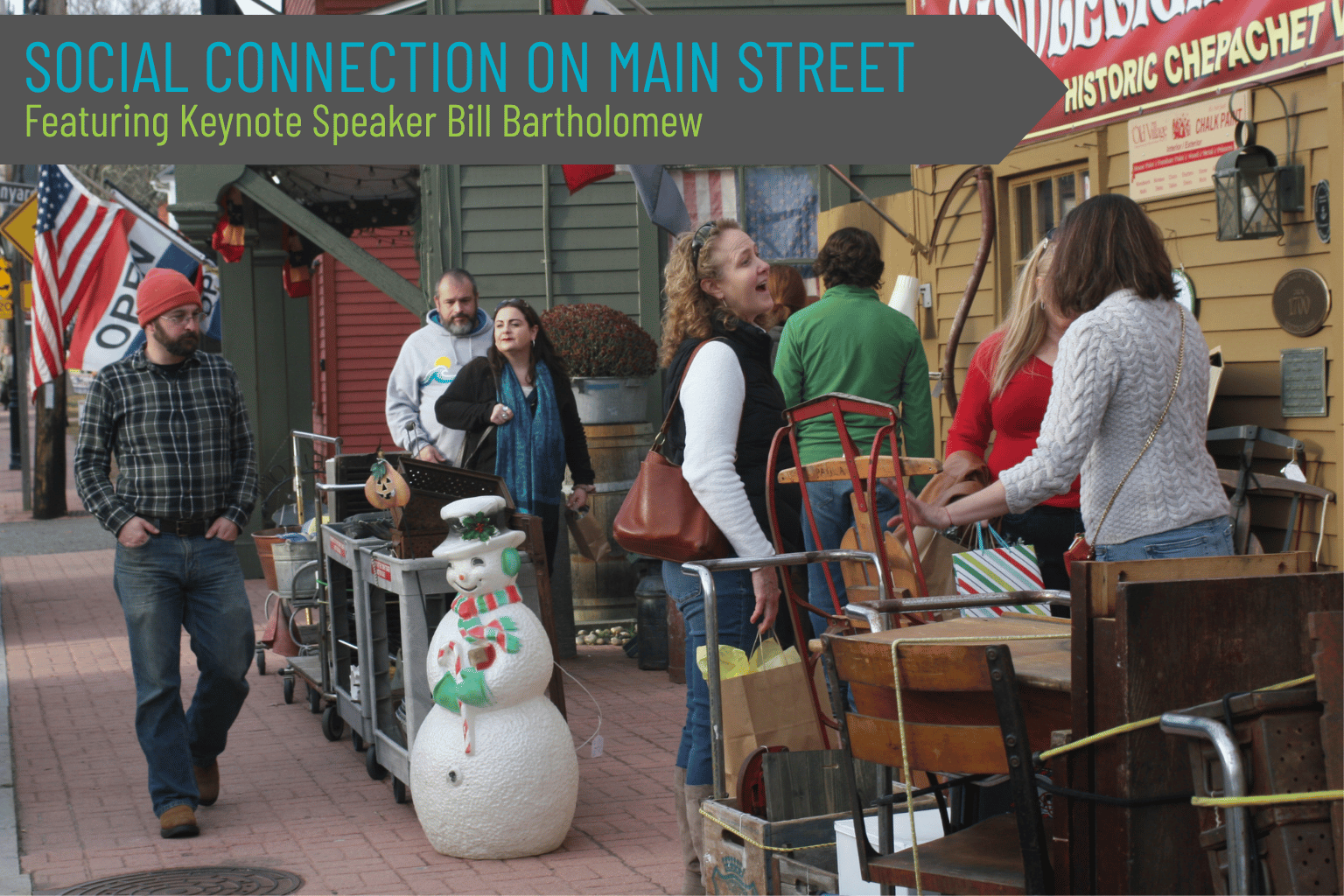
Social Connection on Main Street
a conversation with Keynote Speaker: BILL BARTHOLOMEW
12:00 noon — 1:00pm
Presenter: Bill Bartholomew
RESOURCES
In an age dominated by screens and scrolling, the quiet crisis of social disconnection is growing louder. While social media may promise connection, the connection is shallow and in truth it’s making us feel more isolated than ever—cut off from our neighbors, our communities, and even ourselves. At the same time, the rise of online shopping and big-box stores has drawn people away from local businesses and public gathering places, hollowing out the once-bustling cores of our cities and towns. But what if the solution to this growing loneliness is just a short walk away? Our Main Streets, once the heartbeat of community life in Rhode Island, hold the key to rebuilding the real-world connections we crave. By reimagining these shared spaces as vibrant, inclusive hubs of belonging as “third places” within our communities—and by choosing to invest in them—we can begin to restore the social fabric that holds us together.
THE PROBLEM IS REAL:
The American Psychiatric Association’s Healthy Minds Monthly Poll from 2024 reports that 30% of adults say they have experienced feelings of loneliness at least once a week over the past year, and 10% say they are lonely every day. Younger people were more likely to experience these feelings, with 30% of Americans aged 18-34 saying they were lonely every day or several times a week. LEARN MORE>
INCREASING SOCIAL ISOLATION IS EFFECTING OUR HEALTH:
According to one study, loneliness can increase the risk of heart disease by 29% and the risk of stroke by 32%. It also increases the risk of dementia, depression and even premature death by up to 29%. LEARN MORE >
DID YOU KNOW that lacking social connection has a comparable effect on your health to smoking up to 15 cigarettes a day?
The impacts on our health are so serious that former Surgeon General’s Vivek H. Murthy’s issued an advisory warning that loneliness has developed into a public health crisis. Read It: “Our Epidemic of Loneliness and Isolation”
REVITALIZING OUR MAIN STREETS CAN BE PART OF THE SOLUTION
When properly invested in, Main Streets foster social connection by bringing people together in shared spaces—cafés, parks, markets, and local shops—where everyday interactions build a sense of belonging. A healthy Main Street encourages walking and spontaneous conversations transforming the street into the heart of civic life.
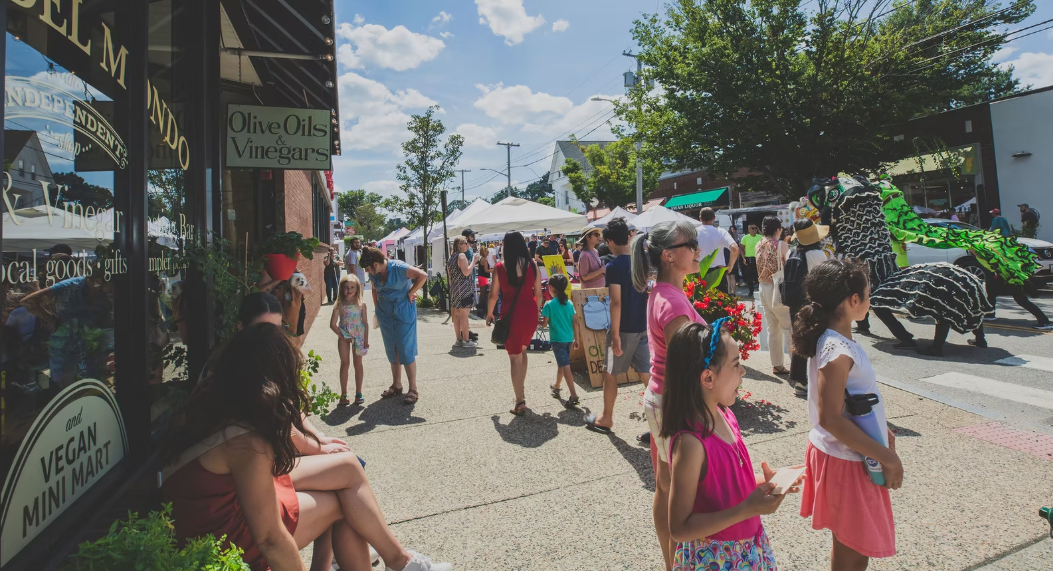
Above: Neighbors gather in enjoyment of Providence’s Hope Street Summer Block Party organized by the Hope Street Merchants Association.
HOW YOU CAN TRANSFORM YOUR MAIN STREETS INTO A PLACE WHERE PEOPLE CONNECT
Any step you take to improve your Main Street, is a step towards building social connection. So just start somewhere. Here are some things to think about:
- Plant trees! A tree canopy cools the street and provides shade for pedestrians — providing a comfortable backdrop for people to connect.
- Improve walkability on your street — prioritize the walker experience over that of the car whenever possible, and people will come. (But what about Parking?! you ask? Yeah, we get it. We’ve got that covered too).
- Plan an event on your Main Street! Activating your Main Street with programming whether that might be a craft fair, brew fest or holiday parade is a fantastic way to draw people in and connect them to each other.
- Attract a diverse collection of businesses that serve people’s needs, being sure to include some (such as coffee shops and cafes) that encourage people to linger.
- Of course there’s so much more. Check out Main Street America’s 4-Point Approach to Main Street Revitalization for an overview of all that goes into managing a strong Main Street — because any improvement to a Main Street will help attract and connect people.
STILL LOOKING FOR MORE?
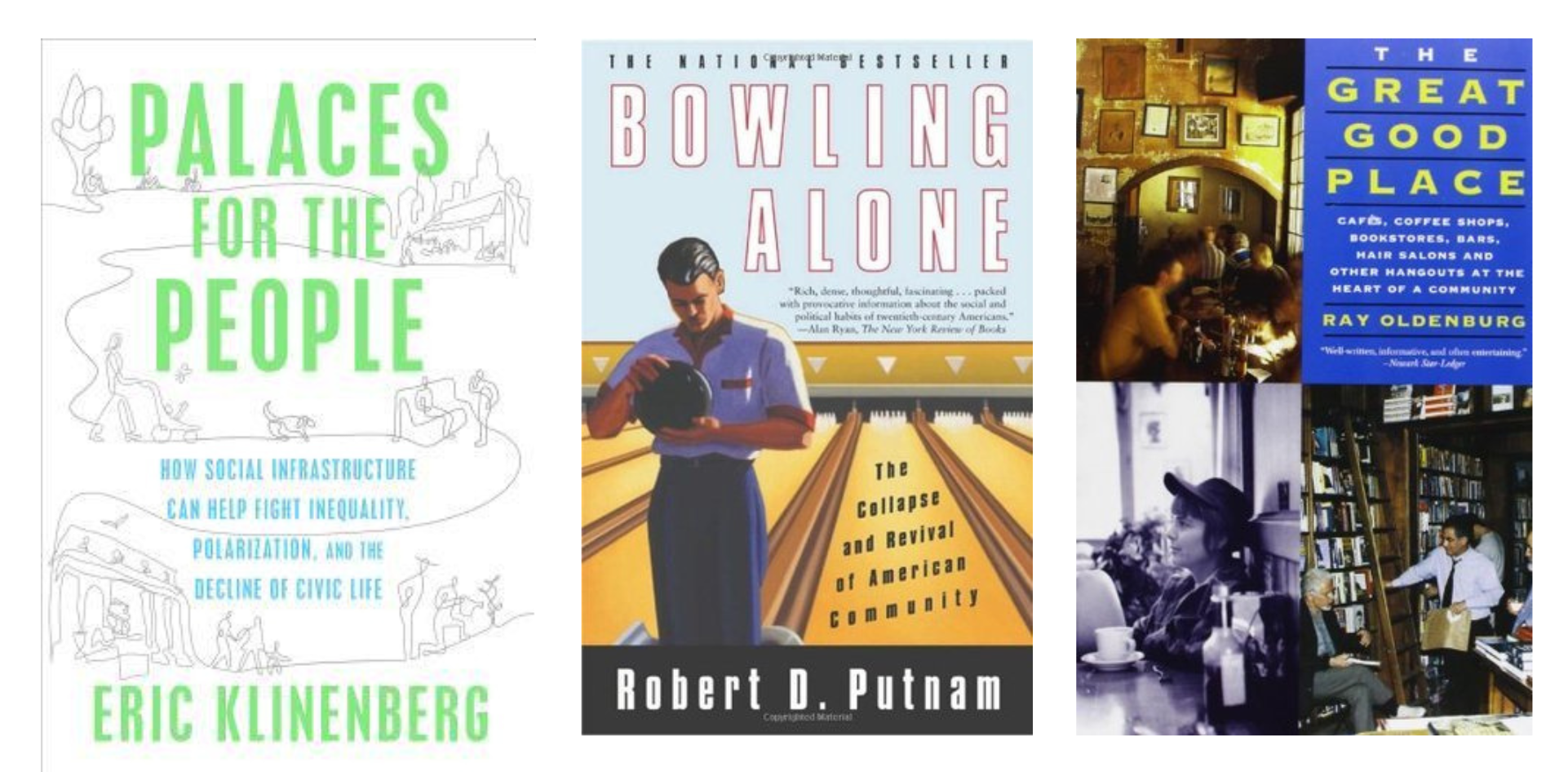
Read these Books:
- Palaces for the People: How Social Infrastructure Can Help Fight Inequality, Polarization, and the Decline of Civic Life by Eric Klinenberg
- Bowling Alone: The Collapse and Revival of American Community by Robert D. Putnam
- The Great Good Place: Cafés, Coffee Shops, Bookstores, Bars, Hair Salons and Other Hangouts at the Heart of a Community by Ray Oldenburg
LISTEN AND WATCH!
LISTEN: Main Street RI director Jillian Finkle and Bill Bartholomew talk social connection on Main Street on the May 6’s episode of Bartholomewtown.
WATCH: Join or Die with Robert Putnam | What Now? with Trevor Noah Podcast
Check out these Initiatives:
- Foundation for Social Connection advances social connection nation-wide rooted in evidence for our collective well-being. Their work translates research into practice, creates long-lasting partnerships and convening opportunities for field builders, and prioritizes social connection as a national value powered by lived experiences.
- Weave: The Social Fabric Project from the Aspen Institute tackles the problem of broken social trust that has left Americans divided, lonely, and in social gridlock.
Grow Smart RI’s 2025 Smart Growth Awards Keynote Presentation: “How Can Places Bring Us Together? Reimagining Rhode Island’s Spaces to Build Social Connection”
This Roundtable and the associated resources are made possible with support from the Centers for Disease Control and Prevention of the U.S. Department of Health and Human Services (HHS.) The contents do not necessarily represent the official views of, nor an endorsement, by CDC/HHS or the U.S. Government.